Real-Time Disease Prediction Using Wearables + Hospital Data Fusion
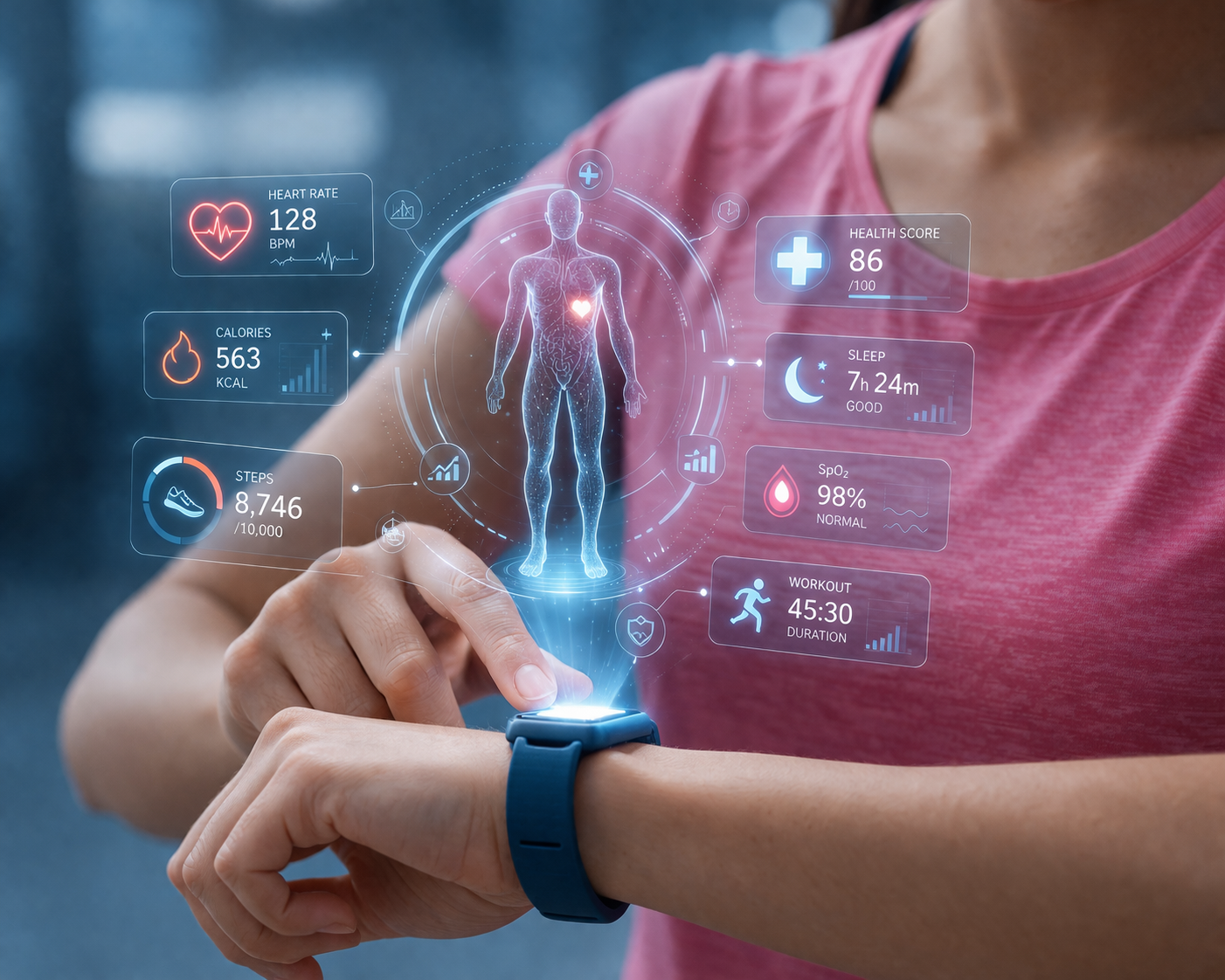
Healthcare is shifting from reactive care to proactive intelligence. Instead of waiting for symptoms to appear, clinicians are increasingly looking for ways to predict disease before it fully manifests. At the center of this transformation is a powerful combination: wearable technology and hospital data fusion.
Individually, both sources of data have limitations. Together, they are redefining how early detection, intervention, and continuous care can work in real time.
Wearables—such as smartwatches, fitness trackers, and medical-grade sensors—have quietly become one of the most widespread health monitoring tools in the world. They continuously collect physiological data including heart rate, activity levels, sleep patterns, oxygen saturation, and even electrocardiogram signals. This creates a constant stream of real-world, real-time health data that was previously unavailable outside clinical settings.
On the other hand, hospitals hold a different kind of data: structured clinical records, lab results, imaging studies, diagnoses, medications, and historical health information. This data is rich, validated, and clinically meaningful, but it is often episodic—captured only when a patient interacts with the healthcare system.
The true breakthrough comes when these two worlds converge.
When wearable data is fused with hospital systems, it creates a continuous, longitudinal view of a patient’s health. Instead of snapshots taken during doctor visits, clinicians gain access to a dynamic timeline that reflects how a patient’s condition evolves in daily life. Artificial intelligence can then analyze this combined dataset to detect subtle patterns that would otherwise go unnoticed.
Consider cardiovascular disease. A patient’s wearable may detect small but consistent changes in resting heart rate, variability, and sleep quality over several weeks. Individually, these signals might not raise concern. But when combined with hospital data—such as a history of hypertension or cholesterol levels—AI models can identify an elevated risk of a cardiac event well before symptoms appear.
Similarly, in chronic conditions like diabetes, wearables can track activity and glucose trends (via connected devices), while hospital data provides context around medications, prior complications, and lab values. Together, they enable predictive insights that support earlier intervention and better disease management.
One of the most promising applications of this fusion is in early warning systems. Hospitals are beginning to use AI models that continuously monitor incoming wearable data alongside clinical records to flag potential deterioration. For example, subtle changes in respiratory rate, movement patterns, and heart rate could signal the onset of infection or respiratory illness days before traditional symptoms prompt a hospital visit.
This capability has profound implications for patient outcomes. Early detection often means simpler treatments, fewer complications, and lower costs. It also reduces the burden on emergency services and hospital capacity by preventing conditions from escalating to critical levels.
Beyond acute conditions, wearable and hospital data fusion is transforming how we understand long-term health trajectories. Mental health, for instance, can be monitored through changes in sleep, activity, and physiological stress markers, combined with clinical history. AI can identify patterns associated with anxiety, depression, or relapse, enabling timely support.
However, the success of this model depends on more than just technology. Data integration remains one of the biggest challenges. Wearable devices generate vast amounts of data in different formats, while hospital systems often operate in silos with limited interoperability. Bridging these systems requires standardized protocols, robust APIs, and a commitment to data sharing across platforms.
Privacy and security are equally critical. Continuous health monitoring raises legitimate concerns about how sensitive data is stored, accessed, and used. Patients must have confidence that their information is protected and that its use is transparent and ethical. Strong governance frameworks and compliance with healthcare regulations are essential to building this trust.
Another challenge lies in signal versus noise. Wearables can produce enormous volumes of data, not all of which is clinically relevant. AI models must be carefully designed to filter meaningful insights from background variability, avoiding false alarms that could overwhelm clinicians or cause unnecessary anxiety for patients.
Despite these hurdles, progress is accelerating. Advances in machine learning, cloud computing, and edge processing are making it increasingly feasible to analyze data in real time. At the same time, healthcare systems are recognizing the value of integrating patient-generated data into clinical workflows.
What is emerging is a new model of care—one that extends beyond hospital walls. In this model, the patient is continuously connected to the healthcare system, not through constant visits, but through data. Clinicians are no longer limited to episodic interactions; they can monitor trends, anticipate risks, and intervene at the right moment.
This shift also changes the role of the patient. With access to their own data and insights, individuals become more active participants in their health. They can see patterns, understand risks, and make informed decisions about lifestyle and treatment. In this sense, wearable technology is not just a data source—it is a tool for empowerment.
Looking ahead, the potential of real-time disease prediction will only grow as more data sources are integrated. Genomics, environmental data, and social determinants of health could further enrich predictive models, creating a more holistic understanding of each patient.
The fusion of wearable and hospital data represents more than a technological advancement. It is a fundamental shift in how healthcare is delivered—from reactive treatment to predictive, personalized care.
The question is no longer whether we can predict disease earlier. It is how quickly we can build the systems, trust, and infrastructure needed to make that prediction actionable.
In the future, the most effective healthcare systems will not be those that treat illness best, but those that prevent it from happening in the first place. And at the heart of that future will be real-time data, intelligent systems, and a seamless connection between patients and providers.