AI Co-Pilots for Chemists: Revolutionizing Molecule Design
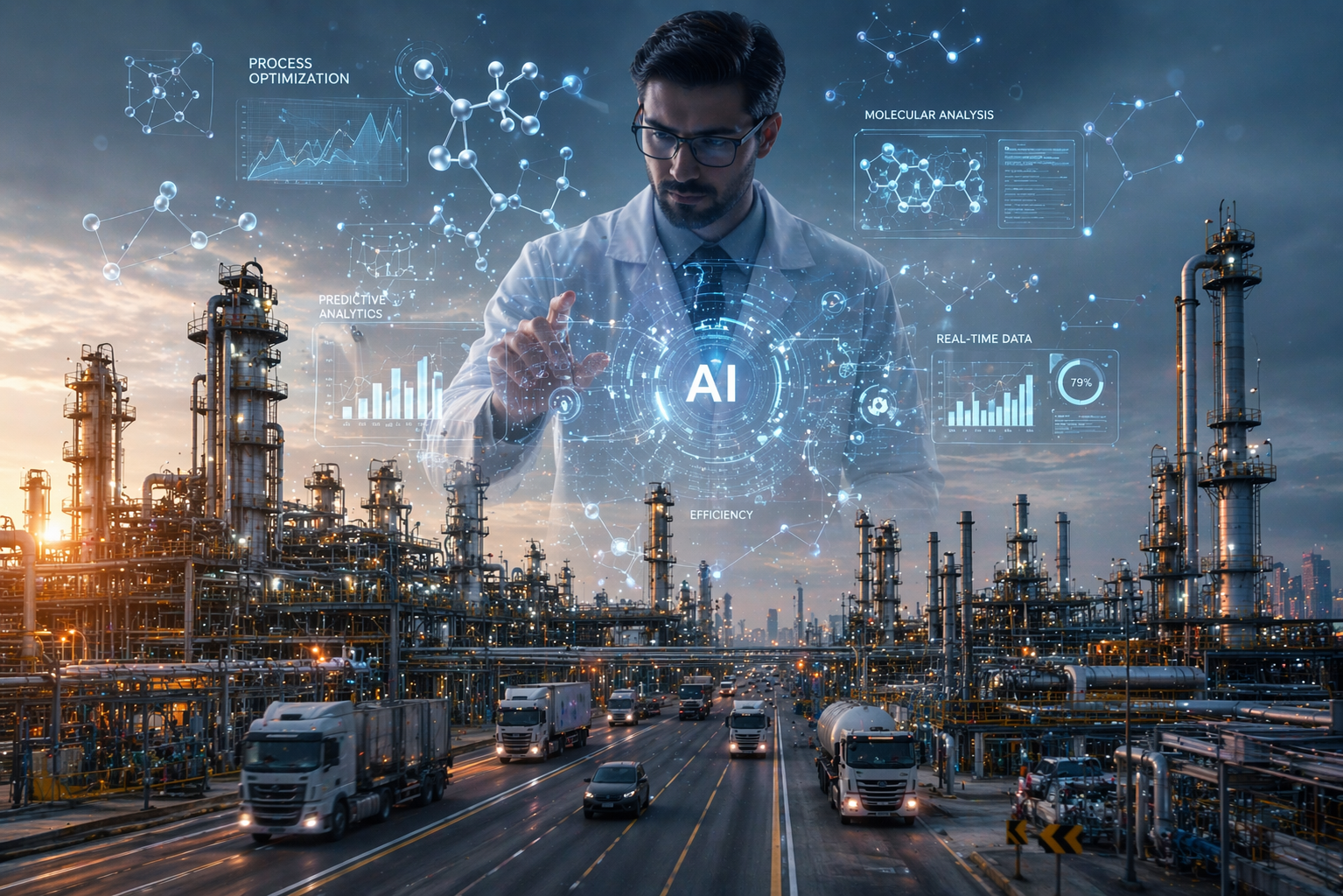
For decades, the art and science of molecule design has been a delicate balance between human intuition, experimental rigor, and computational support. Chemists have relied on accumulated knowledge, trial-and-error experimentation, and increasingly sophisticated modeling tools to discover new compounds—whether for pharmaceuticals, materials science, or energy applications. Today, that paradigm is undergoing a profound transformation. The emergence of AI “co-pilots” is reshaping how molecules are conceived, evaluated, and brought to life, marking a new era where human expertise is augmented by intelligent systems that learn, suggest, and even anticipate.
At its core, molecule design is an exercise in navigating an almost unimaginably vast chemical space. The number of possible small organic molecules alone is estimated to exceed the number of atoms in the observable universe. Traditional computational chemistry tools have helped narrow this space, but they often require significant expertise and computational time. AI co-pilots introduce a fundamentally different approach: instead of exhaustively searching possibilities, they learn patterns from vast datasets of known molecules, reactions, and properties, enabling them to propose promising candidates with remarkable efficiency.
What makes these AI systems particularly powerful is their ability to function not as replacements for chemists, but as collaborators. Much like a co-pilot in aviation, they assist in decision-making while leaving ultimate control in human hands. A chemist might begin with a hypothesis about a molecule’s structure or desired property—such as increased solubility, improved binding affinity, or enhanced thermal stability. The AI co-pilot can then generate variations, predict outcomes, and highlight trade-offs in real time. This interactive loop dramatically accelerates the design cycle, turning what once took months into days or even hours.
One of the most significant breakthroughs enabling this shift is the application of generative AI models to chemistry. These models, inspired by advances in natural language processing, can “speak” the language of molecules using representations like SMILES strings or molecular graphs. By learning from millions of chemical structures, they can generate entirely new compounds that have never been synthesized before, yet exhibit properties aligned with specific goals. This capability opens the door to discovering novel drugs, catalysts, and materials that might otherwise remain hidden.
Beyond generation, AI co-pilots excel at prediction. Accurately forecasting how a molecule will behave—how it binds to a protein, how it reacts under certain conditions, or how stable it is over time—is one of the most challenging aspects of chemistry. Machine learning models trained on experimental and simulation data can now provide highly accurate predictions for a wide range of properties. This reduces the need for costly and time-consuming lab experiments, allowing chemists to focus their efforts on the most promising candidates.
Equally transformative is the integration of AI into the broader laboratory workflow. Modern AI co-pilots are not isolated tools; they are increasingly embedded within digital lab environments, connecting data from electronic lab notebooks, analytical instruments, and simulation platforms. This creates a continuous feedback loop where experimental results refine the AI’s understanding, which in turn improves its recommendations. Over time, the system becomes a repository of institutional knowledge, capturing insights that might otherwise be lost.
The impact of these technologies is particularly evident in drug discovery. Traditionally, bringing a new drug to market can take over a decade and cost billions of dollars. AI co-pilots are helping to compress this timeline by identifying viable drug candidates earlier in the process and optimizing them more efficiently. They can suggest modifications to improve efficacy or reduce toxicity, predict how a compound will interact with biological targets, and even propose synthetic pathways for manufacturing. While challenges remain—especially in clinical validation—the early results are promising, with several AI-designed molecules already entering clinical trials.
Materials science is another domain experiencing rapid change. Designing materials with specific properties—such as strength, conductivity, or sustainability—often involves complex trade-offs and extensive experimentation. AI co-pilots can explore these trade-offs at scale, identifying compositions and structures that meet multiple criteria simultaneously. This is accelerating innovation in areas like battery technology, where new materials are needed to improve energy density and reduce environmental impact.
Despite these advances, the rise of AI in chemistry is not without its challenges. One of the primary concerns is data quality. Machine learning models are only as good as the data they are trained on, and in chemistry, data can be sparse, noisy, or biased. Ensuring that AI systems are trained on diverse, high-quality datasets is critical to their reliability. There is also the question of interpretability. Chemists need to understand why an AI system is recommending a particular molecule or pathway, especially when decisions have significant scientific or commercial implications. Efforts are underway to develop explainable AI techniques that provide insights into model reasoning.
Another important consideration is the evolving role of the chemist. As AI takes on more routine and computational tasks, the skill set required in the field is shifting. Future chemists will need to be comfortable working alongside AI systems, interpreting their outputs, and integrating them into experimental workflows. This does not diminish the importance of human expertise; rather, it elevates it. Creativity, critical thinking, and domain knowledge remain essential, but they are now complemented by the ability to leverage advanced computational tools.
Ethical and regulatory considerations also come into play, particularly in areas like pharmaceuticals. The use of AI in molecule design raises questions about accountability, intellectual property, and safety. Regulatory frameworks are evolving to address these issues, but there is still much work to be done to ensure that AI-driven discoveries meet the same rigorous standards as traditional approaches.
Looking ahead, the potential of AI co-pilots in chemistry is immense. As models become more sophisticated and datasets continue to grow, these systems will become even more capable and reliable. We can envision a future where chemists interact with AI in natural, conversational ways—describing desired outcomes and receiving actionable insights in return. The boundary between human intuition and machine intelligence will blur, creating a seamless collaborative environment.
In this new landscape, the role of the chemist is not diminished but amplified. AI co-pilots are enabling scientists to think bigger, explore deeper, and innovate faster than ever before. By transforming molecule design from a largely manual process into a dynamic, data-driven collaboration, they are unlocking new possibilities across science and industry. The revolution is not about replacing chemists—it is about empowering them to reach new heights of discovery.