
AI in Disease Detection
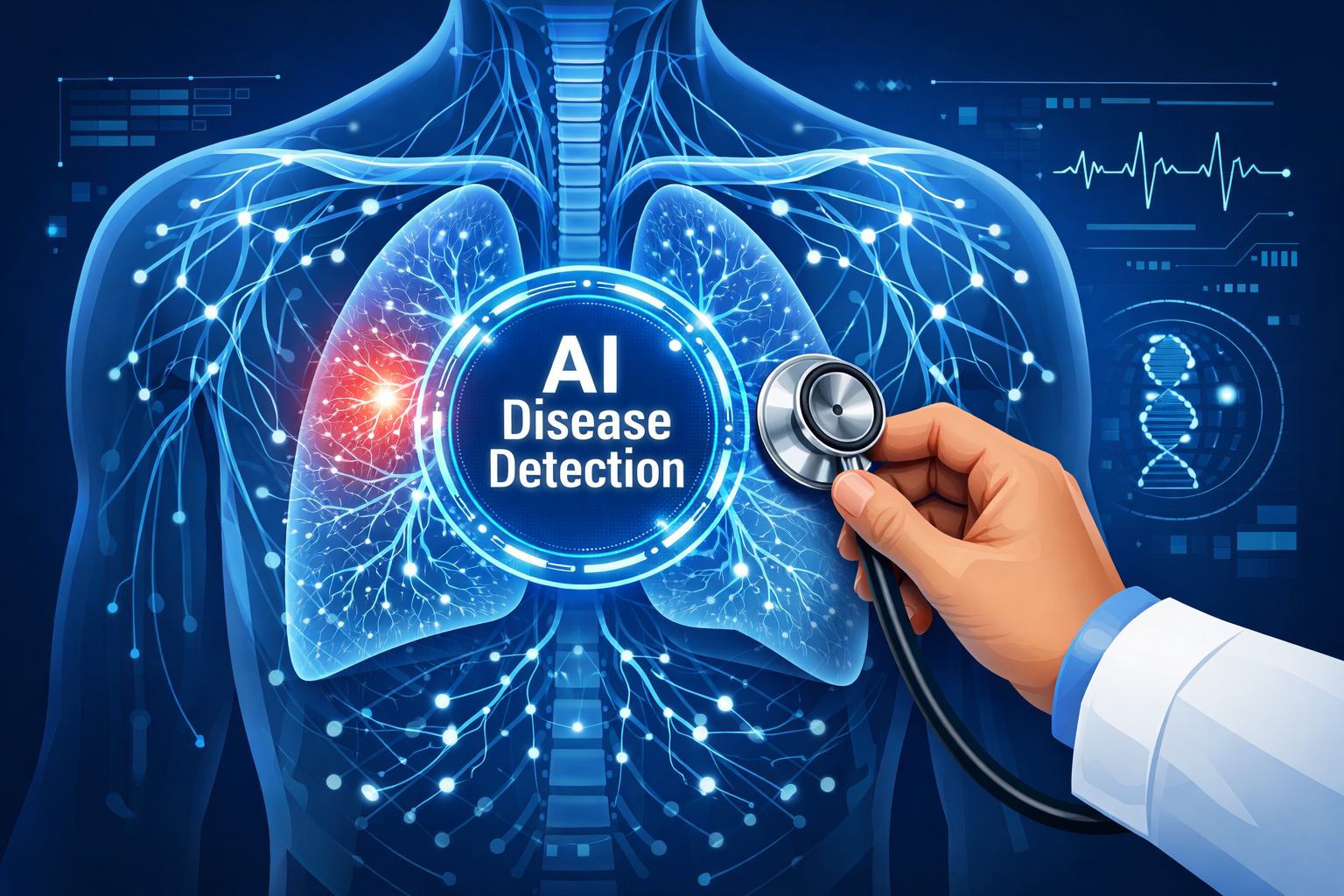
Artificial Intelligence (AI) is transforming the healthcare industry, especially in the area of disease detection. AI can analyze large amounts of medical data such as X-rays, MRI scans, CT scans, blood test results, and patient history to identify diseases at an early stage. Early detection is very important because it helps doctors start treatment earlier and increases the chances of recovery.
AI works by using machine learning algorithms that are trained on thousands or even millions of medical images and patient records. These systems learn to identify patterns and abnormalities that may be difficult for humans to detect. As a result, AI can help doctors in making faster and more accurate diagnoses.
One of the most important uses of AI in disease detection is in cancer detection. AI systems can analyze medical images such as mammograms, lung CT scans, and skin images to detect cancer at an early stage. For example, AI can detect small tumors that may not be easily visible to the human eye. This helps in early treatment and can save many lives.
AI is also used in detecting heart diseases. AI can analyze ECG data and heart imaging to identify irregular heart rhythms, blocked arteries, and other heart-related problems. Similarly, AI is used in detecting brain diseases such as tumors, strokes, and neurological disorders by analyzing MRI scans.
Another important application of AI is in detecting diabetic retinopathy, a disease that affects the eyes of diabetic patients and can lead to blindness if not treated early. AI systems can analyze retinal images and detect signs of damage in the eye. This helps doctors start treatment before the condition becomes serious.
AI is also used in detecting infectious diseases. For example, during the COVID-19 pandemic, AI was used to analyze chest scans and identify COVID-related lung infections. AI systems were also used to track the spread of the virus and predict outbreak patterns.
Benefits of AI in Disease Detection
AI provides many benefits in disease detection:
- Early detection of diseases
- Faster diagnosis
- More accurate results
- Reduced workload for doctors
- Helps in analyzing large medical data
- Improves patient care
- Supports doctors in decision-making
AI does not replace doctors, but it helps doctors make better decisions. AI acts as a support system that provides suggestions based on data analysis.
Challenges of AI in Healthcare
Although AI has many benefits, there are also some challenges:
- High cost of AI technology
- Data privacy and security issues
- Requires large amounts of medical data
- Needs proper training and testing
- Cannot fully replace human doctors
AI systems must be carefully tested before being used in hospitals because incorrect predictions can be dangerous.
Future of AI in Disease Detection
The future of AI in healthcare is very promising. In the future, AI may be able to detect diseases even before symptoms appear. AI may also help in personalized treatment by analyzing a patient’s genetic data and medical history.
AI-powered mobile apps may allow people to check their health conditions from home. Smart devices and wearable technology will continuously monitor health and AI will analyze the data to detect diseases early.


