Arctic Healthcare Innovation Sets Blueprint for Future Digital Care Models

In the remote and rugged landscapes of Northern Norway, healthcare delivery is undergoing a profound transformation, driven by the demands of geography, climate, and population dynamics. Across scattered islands, deep fjords, and vast Arctic terrain, providers are reimagining how care is delivered, turning one of the world’s most challenging environments into a testing ground for next-generation healthcare systems.
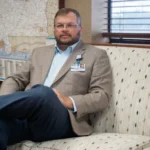
At the center of this shift is the University Hospital of North Norway, where digitalisation and integrated care strategies are enabling providers to overcome long-standing barriers related to distance, workforce limitations, and fragmented service delivery. Markus Rumpsfeld, the hospital’s chief of digitalisation, development and integrated care, describes the Arctic as a preview of what many global healthcare systems will eventually face—delivering high-quality care with constrained resources across increasingly complex patient pathways.
Healthcare in the region is shaped by a small and ageing population spread across vast distances, where maintaining specialised expertise locally is difficult and unpredictable weather can disrupt access to services. These conditions have exposed systemic inefficiencies, particularly the fragmentation between hospitals, municipal care, general practitioners, and home services. In response, providers are shifting away from traditional, place-based models toward integrated, patient-centred care pathways that prioritise continuity and coordination.
A key example of this transformation is the Patient-Centred Healthcare Team model, which connects specialists with local care providers to deliver coordinated support for patients with chronic and complex conditions. Built around understanding individual patient needs, the model has contributed to improved care pathways, reduced hospital readmissions, and lower reliance on emergency services. Digital tools are central to this approach, with video consultations, remote monitoring, and hospital-at-home services allowing care to reach patients in their own communities rather than requiring travel over long distances.
Innovation in the region extends beyond virtual care into diagnostics and emergency response. In stroke care, decentralised CT imaging enables patients in remote areas to be assessed locally while specialists provide real-time input from urban centres, significantly reducing treatment delays. Coordinated emergency protocols ensure that healthcare professionals across the region operate within a unified framework, while emerging technologies such as drone-based logistics and enhanced ambulance boats are improving the delivery of medical supplies and patient safety in extreme conditions.
Despite these advances, workforce sustainability remains a pressing concern. Like many rural regions, Northern Norway faces challenges in recruiting and retaining healthcare professionals. Efforts are underway to redesign care delivery through team-based models and task-sharing initiatives that maximise the efficiency of existing staff. At the same time, investment in specialised facilities and professional development is helping to attract talent and build resilient clinical environments.
The transformation underway is not solely technological but also cultural, requiring a shift toward proactive, distributed care models supported by integrated systems and leadership committed to embedding innovation into daily operations. In this context, preparedness for crises is deeply intertwined with routine healthcare delivery, ensuring that systems remain flexible and resilient under both normal and extreme conditions.
While the Arctic setting may seem unique, the solutions emerging from Northern Norway are increasingly relevant on a global scale. By demonstrating how integrated care, digital infrastructure, and patient-centred design can overcome structural challenges, the region is offering a compelling blueprint for sustainable healthcare systems worldwide.