
Qualified Health Raises $125 Million to Scale Enterprise AI Across Health Systems
Qualified Health, a startup that helps health systems evaluate, deploy, and manage artificial intelligence technologies, has raised $125 million in new funding to expand its enterprise AI platform. The funding round was led by venture capital firm New Enterprise Associates, with participation from Transformation Capital, GreatPoint Ventures, Cathay Innovation, Anthropic, Menlo Ventures’ Anthology fund, and…

OpenEvidence Launches AI-Powered Medical Coding Feature to Automate Clinical Billing
OpenEvidence Launches AI-Powered Medical Coding Feature to Automate Clinical Billing OpenEvidence has introduced a new artificial intelligence-powered medical coding feature called Coding Intelligence, integrated into its clinical AI assistant platform. The new feature automatically generates medical billing codes at the end of a doctor-patient visit, helping physicians reduce administrative workload and improve billing accuracy. The…
Provider Identity as a Strategic Growth Lever: Reducing Onboarding Friction and Unlocking Network Performance
Provider onboarding delays are often viewed as operational inefficiencies, but in reality, they reveal a deeper strategic problem: fragmented and inconsistent provider identity data across healthcare organizations. In many healthcare systems, provider information is stored across multiple disconnected platforms such as credentialing systems, HR systems, Electronic Health Records (EHRs), payer enrollment platforms, provider directories, and…

OpenAI, HealthBench, Claude and HIPAA Compliance: What Healthcare IT Needs to Know
Artificial intelligence is rapidly transforming the healthcare industry, and major technology companies are now introducing specialized AI tools designed specifically for healthcare organizations. Companies such as OpenAI, Google and Anthropic have recently launched healthcare-focused AI solutions, which are expected to influence how hospitals and health systems make decisions about purchasing and implementing AI technologies. One…

How to Address Shadow AI in Healthcare
As artificial intelligence tools become more common in healthcare, organizations are now facing a new challenge known as “shadow AI.” This concept is similar to shadow IT, where employees use software or digital tools without approval from the IT department. In the case of shadow AI, staff members may start using AI tools on their…

CTEM for Healthcare: A Guide to Continuous Threat Exposure Management
Healthcare organizations are increasingly becoming targets of cyberattacks such as ransomware, credential theft and data breaches. Because hospitals depend on digital systems and connected medical devices, even a small cybersecurity issue can disrupt patient care. To address this growing risk, many healthcare organizations are now adopting a modern cybersecurity approach called Continuous Threat Exposure Management…

What Healthcare Organizations Can Learn from NIST’s AI Risk Management Framework
Artificial intelligence is rapidly becoming part of everyday healthcare operations, from clinical documentation tools to AI systems that help doctors make evidence-based decisions. However, as AI adoption grows, so do concerns about data privacy, security risks and regulatory compliance. Healthcare organizations are now looking for clear guidance on how to safely use AI technologies, and…

Healthcare Cyber Resilience: A Comprehensive Security and Recovery Guide
Healthcare organizations are facing increasing threats from ransomware and cyberattacks, which can cause serious IT outages and disrupt critical hospital systems. Because hospitals rely heavily on digital systems such as electronic health records (EHRs), imaging systems, and diagnostic platforms, even a short downtime can affect patient care and safety. As a result, healthcare leaders are…
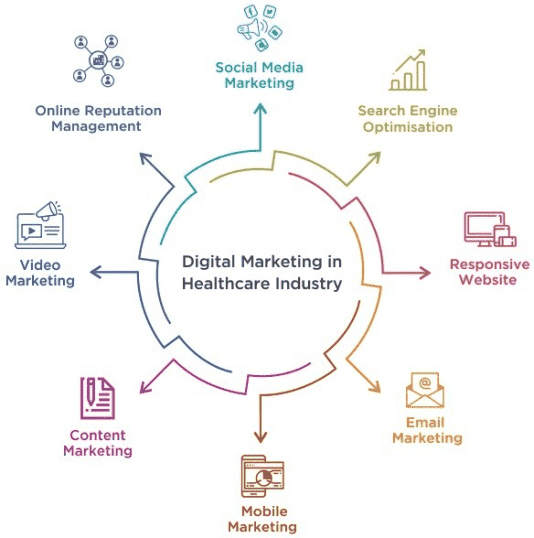
Digital Marketing for Healthcare Industry
Digital marketing has become very important in the healthcare industry. Earlier, hospitals and clinics depended mostly on traditional marketing methods such as newspaper advertisements, banners, and word-of-mouth promotion. However, today patients search for hospitals, doctors, treatments, and health information online before making a decision. Because of this change in patient behavior, healthcare organizations must use…
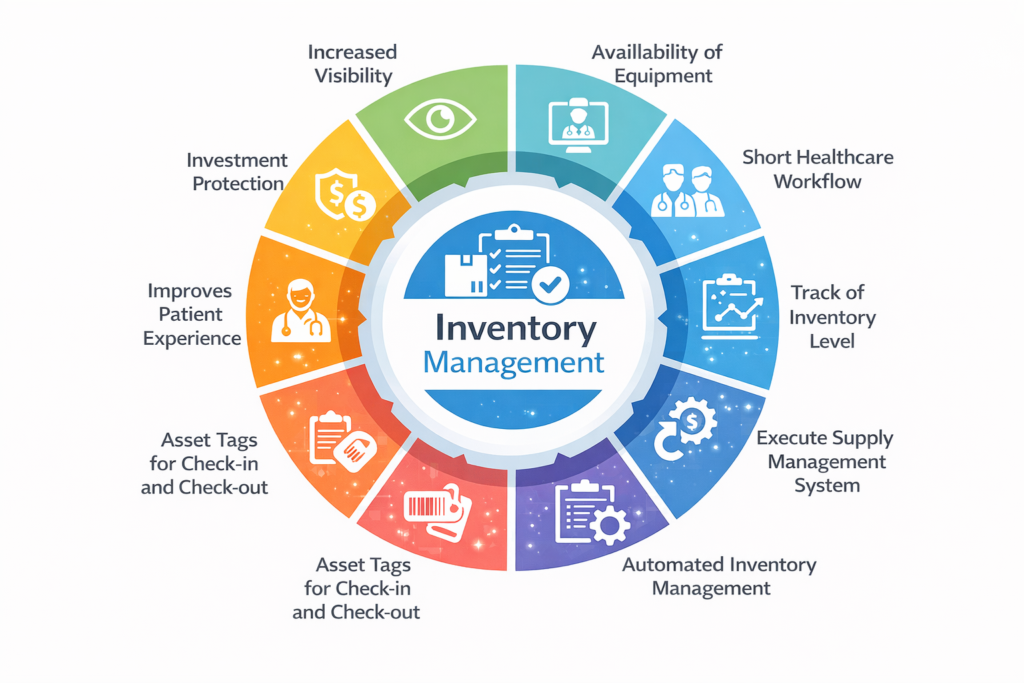
How Hospitals Manage Medicines and Equipment
Hospitals manage medicines and equipment through a system called Hospital Inventory Management or Healthcare Supply Chain Management. This system ensures that medicines, surgical tools, medical equipment, and other supplies are available in the right quantity at the right time. Proper management of medicines and equipment is very important because shortages can delay treatment, and excess…

Hospital Workflow Optimization
Hospital workflow optimization is the process of improving the efficiency, speed, and coordination of tasks and processes within a hospital. Hospitals handle many activities every day such as patient registration, diagnosis, treatment, laboratory testing, pharmacy services, billing, and discharge. If these processes are not properly managed, hospitals may face delays, overcrowding, staff workload issues, and…
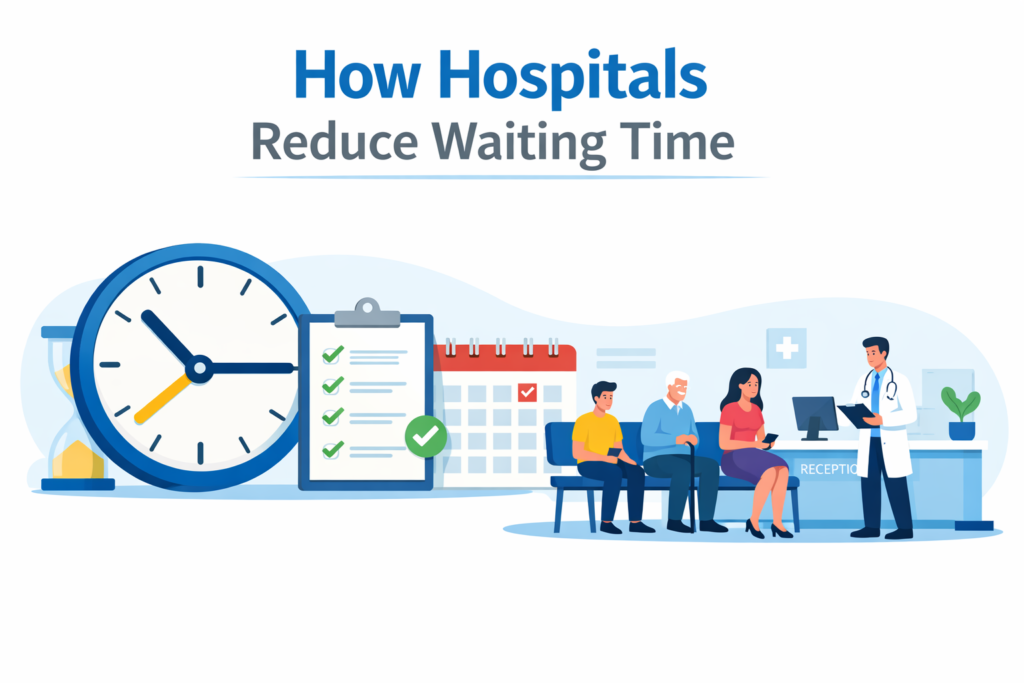
How Hospitals Reduce Waiting Time
Long waiting times are one of the biggest problems in hospitals. Patients often have to wait for registration, consultation, tests, and billing. Hospitals use different management and technology methods to reduce waiting time and improve patient experience. Efficient hospital operations not only improve patient satisfaction but also help hospitals treat more patients in less time….