
Digital Marketing for Healthcare Industry
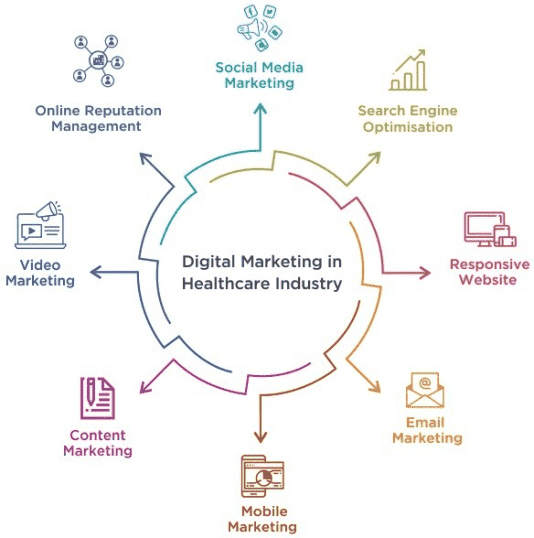
Digital marketing has become very important in the healthcare industry. Earlier, hospitals and clinics depended mostly on traditional marketing methods such as newspaper advertisements, banners, and word-of-mouth promotion. However, today patients search for hospitals, doctors, treatments, and health information online before making a decision. Because of this change in patient behavior, healthcare organizations must use digital marketing to reach patients, build trust, and grow their services.
Digital marketing in healthcare refers to promoting hospitals, clinics, healthcare services, and medical products using digital platforms such as websites, search engines, social media, email, and mobile applications. The main goal is to connect with patients online, provide useful health information, and encourage them to use healthcare services.
One of the most important parts of digital marketing in healthcare is website development. A hospital’s website acts as a digital front office. Patients visit the website to check doctor availability, services, treatment details, appointment booking, and contact information. A good healthcare website should be simple, mobile-friendly, fast, and easy to navigate. It should also include important information such as departments, doctor profiles, patient testimonials, and online appointment booking.
Another important digital marketing strategy is Search Engine Optimization (SEO). SEO helps hospital websites appear at the top of search engine results when patients search for terms like “best hospital near me,” “skin specialist,” or “dentist in Pune.” By using proper keywords, writing health blogs, and optimizing website content, hospitals can attract more visitors to their website without paid advertising.
Social media marketing is also very powerful in the healthcare industry. Hospitals use platforms like Instagram, Facebook, LinkedIn, and YouTube to share health tips, patient success stories, awareness campaigns, doctor interviews, and hospital updates. Social media helps hospitals connect with patients, build trust, and create brand awareness.
Content marketing is another important strategy. Hospitals and healthcare companies write blogs, articles, and educational content about diseases, treatments, prevention, and healthy lifestyle tips. When hospitals provide useful information, patients trust them more and are more likely to choose their services. Content marketing also improves SEO ranking.
Email marketing is used by hospitals to send appointment reminders, health tips, vaccination reminders, health checkup packages, and promotional offers. Email marketing helps hospitals maintain long-term relationships with patients.
Online advertising is also commonly used in healthcare digital marketing. Hospitals use Google Ads and social media ads to promote their services such as health checkups, dental services, cosmetic treatments, and specialized surgeries. Paid advertising helps hospitals reach targeted audiences quickly.
Another important part of healthcare digital marketing is online reputation management. Many patients check reviews and ratings on Google before visiting a hospital. Hospitals must monitor online reviews and respond to patient feedback. Good reviews help attract new patients, while negative reviews help hospitals identify areas for improvement.
Telemedicine and mobile app marketing is also growing in the healthcare industry. Many hospitals now provide online doctor consultation through mobile apps and websites. Digital marketing helps promote these services and reach more patients, especially in remote areas.
There are many benefits of digital marketing in healthcare. It helps hospitals reach more patients, improves brand awareness, reduces marketing costs compared to traditional advertising, and improves patient engagement. It also helps hospitals educate patients and spread awareness about diseases and preventive care.
However, there are also some challenges in healthcare digital marketing. Healthcare organizations must protect patient data and privacy. They must ensure that the information shared online is accurate and medically correct. Healthcare marketing must follow legal and ethical guidelines, and hospitals should avoid misleading advertisements.
In the future, digital marketing in healthcare will become more advanced with the use of Artificial Intelligence, chatbots, personalized marketing, and data analytics. AI chatbots can answer patient questions 24/7. Data analytics can help hospitals understand patient behavior and create personalized marketing campaigns. Personalized healthcare marketing will help hospitals provide the right service to the right patient at the right time.


