Digital Marketing Strategy for Hospitals
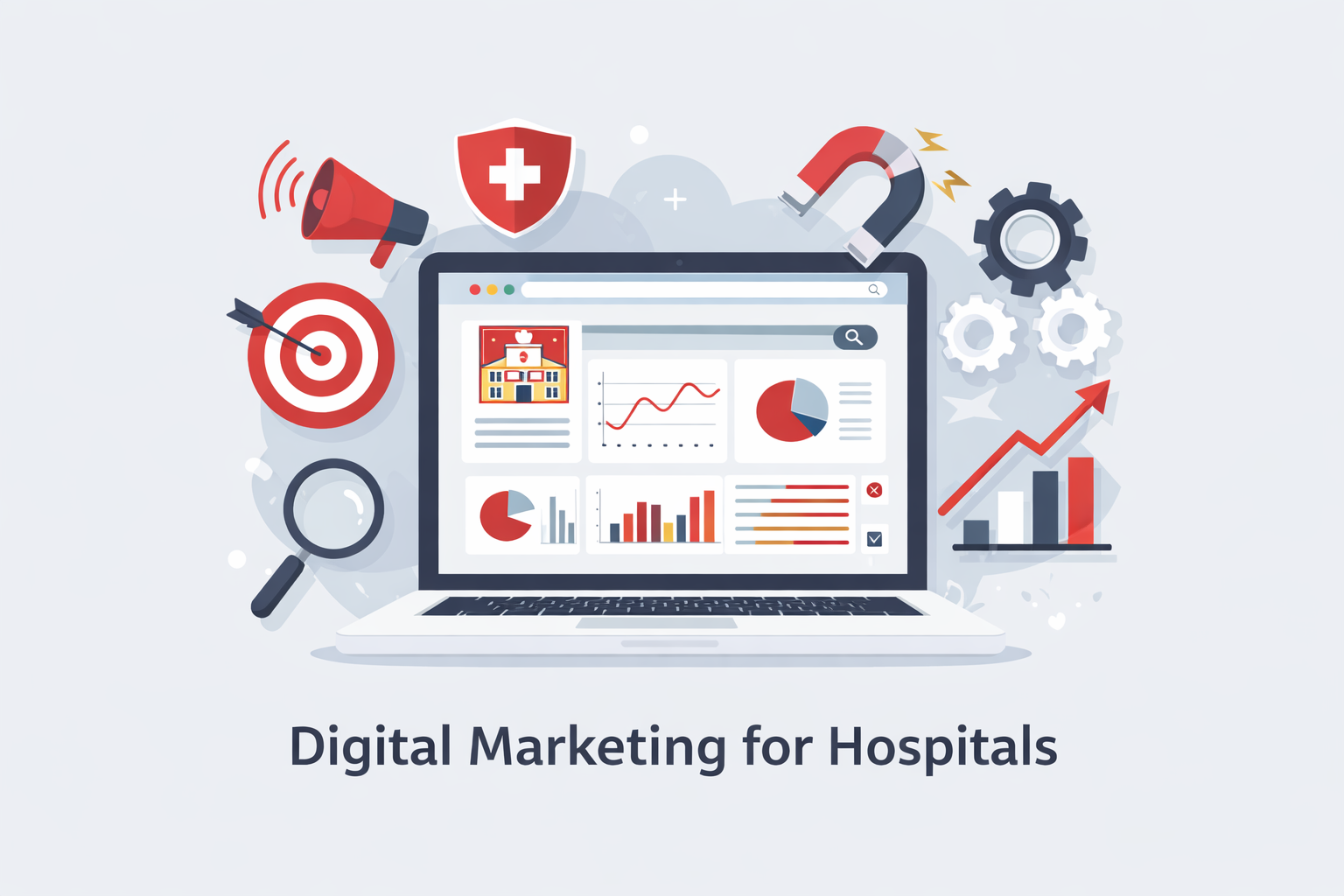
In today’s digital world, hospitals can no longer rely only on traditional marketing methods such as newspaper advertisements, hoardings, or word-of-mouth referrals. Patients now search online before choosing a hospital, doctor, or treatment. They read reviews, visit hospital websites, compare services, and even book appointments online. This shift in patient behavior has made digital marketing an essential strategy for hospitals to attract patients, build trust, and improve their brand reputation.
A digital marketing strategy for hospitals starts with building a strong online presence. The hospital website is the foundation of digital marketing. It should be professional, mobile-friendly, fast, and easy to navigate. The website should include doctor profiles, services offered, online appointment booking, contact information, patient testimonials, treatment information, and blog articles. A well-designed website helps build trust and provides important information to patients.
Search Engine Optimization (SEO) is one of the most important parts of digital marketing for hospitals. When patients search for terms like “best hospital near me,” “cardiologist in Pune,” or “dental clinic near me,” the hospital website should appear at the top of search results. SEO includes optimizing website content, using relevant keywords, improving website speed, writing blog articles, and creating location-based content. Hospitals that invest in SEO get long-term organic traffic without paying for ads.
Social media marketing is also very important for hospitals. Platforms like Instagram, Facebook, LinkedIn, and YouTube help hospitals connect with patients and share useful information. Hospitals can post health tips, patient success stories, doctor interviews, awareness campaigns, and new technology updates. Social media helps hospitals build trust and engagement with the community.
Content marketing is another powerful digital marketing strategy. Hospitals can write blogs on topics such as disease prevention, treatment options, healthy lifestyle tips, medical technology, and patient education. Educational content builds trust and positions the hospital as an expert in healthcare.
Online reputation management is extremely important in healthcare. Many patients read Google reviews before visiting a hospital. Hospitals must monitor and respond to patient reviews professionally. Positive reviews attract more patients, while negative reviews should be handled carefully with proper responses and solutions.
Hospitals can also use paid digital advertising such as Google Ads and social media ads. Paid ads help hospitals reach targeted audiences such as people searching for specific treatments, people in a specific location, or people in a certain age group. This helps hospitals attract the right patients.
Email marketing is another useful strategy. Hospitals can send appointment reminders, health tips, vaccination reminders, health checkup packages, and newsletters through email. This helps hospitals stay connected with patients and improve patient retention.
Another important digital marketing strategy is local SEO. Hospitals should register their hospital on Google Business Profile so that their hospital appears on Google Maps and local search results. This helps patients find the hospital location, contact number, working hours, and reviews easily.
Hospitals are also using video marketing. Hospitals can upload videos such as doctor interviews, patient testimonials, treatment explanations, hospital virtual tours, and health awareness videos. Video content is very effective because it is easy to understand and builds trust quickly.
Analytics and performance tracking are important in digital marketing. Hospitals should track website traffic, social media engagement, ad performance, patient inquiries, and appointment bookings. This helps hospitals understand which marketing strategy is working and which needs improvement.
In the future, digital marketing for hospitals will include AI chatbots, personalized marketing, voice search optimization, and automated appointment booking systems. Hospitals will use data analytics and artificial intelligence to target the right patients and provide personalized healthcare marketing.