Digital Transformation in Healthcare Business
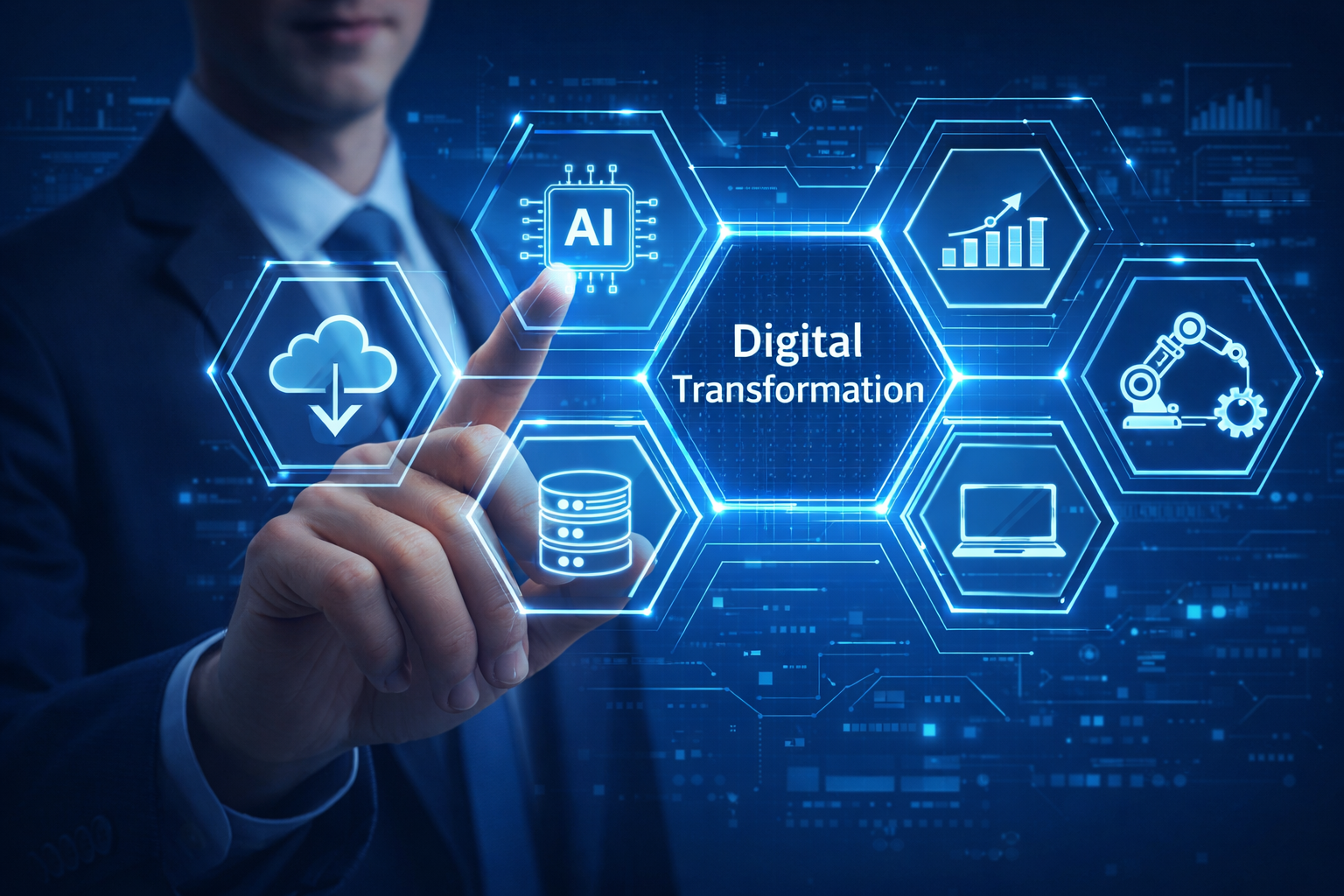
Digital transformation is changing every industry, and healthcare is one of the most important sectors where technology is making a huge impact. Healthcare businesses today are no longer limited to traditional hospitals and clinics. With the help of digital technologies such as Artificial Intelligence (AI), cloud computing, telemedicine, wearable devices, and big data analytics, healthcare services are becoming faster, smarter, and more accessible.
This blog explains how digital transformation is improving healthcare businesses, the technologies involved, the benefits, challenges, and the future of digital healthcare.
What is Digital Transformation in Healthcare?
Digital transformation in healthcare means using digital technologies to improve healthcare services, hospital management, patient care, and business operations. It involves replacing manual and paper-based systems with digital systems such as Electronic Health Records (EHR), online appointment systems, telemedicine platforms, and AI-based diagnostic tools.
In simple words, digital transformation helps healthcare businesses provide better services to patients while also improving efficiency and reducing costs.
Key Technologies Driving Digital Transformation in Healthcare
1. Artificial Intelligence (AI)
Artificial Intelligence is one of the most powerful technologies in healthcare. AI can analyze large amounts of medical data and help doctors detect diseases early. AI is used in medical imaging, disease prediction, drug discovery, and robotic surgeries.
For example, AI can analyze X-rays, CT scans, and MRI images to detect diseases such as cancer, lung infections, and brain tumors faster and more accurately.
2. Telemedicine
Telemedicine allows patients to consult doctors online through video calls or mobile apps. This technology became very popular during the COVID-19 pandemic and is still widely used today.
Telemedicine helps patients in rural areas who cannot travel to hospitals frequently. It also saves time and reduces hospital crowding.
3. Electronic Health Records (EHR)
Electronic Health Records store patient data digitally, including medical history, prescriptions, test reports, and treatment details. Doctors can access patient records anytime, which helps in better diagnosis and treatment.
EHR also reduces paperwork and improves hospital management.
4. Wearable Devices
Wearable devices such as smartwatches and fitness bands help track health data like heart rate, steps, sleep patterns, oxygen levels, and blood pressure. This data can be shared with doctors for monitoring patient health remotely.
These devices are very useful for patients with chronic diseases such as diabetes and heart disease.
5. Big Data and Cloud Computing
Healthcare organizations generate a large amount of data every day. Big data analytics helps in analyzing patient data to identify disease patterns, improve treatments, and make better business decisions.
Cloud computing helps hospitals store and manage large amounts of data securely and access it from anywhere.
Benefits of Digital Transformation in Healthcare Business
1. Better Patient Care
Digital technologies help doctors diagnose diseases faster and more accurately. Patients receive better treatment and care through digital monitoring and AI-based systems.
2. Cost Reduction
Digital systems reduce paperwork, administrative work, and manual errors. Hospitals can save money by automating many processes.
3. Improved Efficiency
Hospital management systems help manage appointments, billing, patient records, and staff management efficiently. This improves overall hospital productivity.
4. Remote Healthcare Services
Telemedicine and remote monitoring allow patients to receive treatment from home. This is especially helpful for elderly patients and people living in rural areas.
5. Data-Driven Decision Making
Healthcare businesses can use data analytics to make better business decisions, improve services, and plan future investments.
Challenges in Digital Transformation in Healthcare
Even though digital transformation has many benefits, there are also some challenges.
1. Data Security and Privacy
Healthcare data is very sensitive. Hospitals must protect patient data from cyber attacks and data breaches.
2. High Implementation Cost
Implementing digital systems requires a lot of investment in technology, software, and training.
3. Training and Skill Requirements
Doctors and hospital staff must be trained to use new digital technologies and software systems.
4. System Integration Issues
Many hospitals use different software systems that may not work well together. Integrating all systems into one platform can be difficult.
5. Resistance to Change
Some healthcare staff may resist using new technologies because they are used to traditional methods.
Impact of Digital Transformation on Healthcare Business
Digital transformation is not only improving patient care but also changing the healthcare business model.
Healthcare businesses are now offering online consultations, digital health packages, subscription-based healthcare services, and mobile health applications. Many healthcare startups are using AI and data analytics to create innovative healthcare solutions.
Digital marketing is also becoming important in healthcare. Hospitals now use websites, social media, and online advertising to attract patients and build their brand.
Healthcare businesses that adopt digital technologies can improve their services, reduce costs, and gain a competitive advantage in the market.
Future of Digital Healthcare
The future of healthcare is digital. Some future trends include:
- AI-based disease prediction
- Robotic surgeries
- Personalized medicine
- Internet of Medical Things (IoMT)
- Blockchain for medical records
- Virtual reality for medical training
- Smart hospitals with automated systems
In the future, patients will be able to monitor their health in real-time using wearable devices, and doctors will be able to diagnose diseases using AI before symptoms become serious.
Digital transformation will make healthcare more preventive rather than reactive. This means diseases will be detected early, and patients will receive treatment before the disease becomes serious.