Healthcare Data Management & Business Analytics
In the modern healthcare industry, data has become one of the most valuable assets. Hospitals, clinics, diagnostic centers, insurance companies, and healthcare startups generate a huge amount of data every day. This data includes patient records, medical reports, billing information, appointment details, prescriptions, insurance data, and operational data. Managing this large amount of data properly and using it for decision-making is called healthcare data management and business analytics.
Healthcare data management refers to the process of collecting, storing, organizing, and maintaining healthcare data in a secure and efficient way. Business analytics refers to analyzing this data to improve hospital performance, reduce costs, increase revenue, and provide better patient care. Together, healthcare data management and business analytics help healthcare organizations make smarter business and medical decisions.
In traditional healthcare systems, data was stored in paper files and manual registers. This made it difficult to find patient history, track hospital performance, and manage operations efficiently. Today, hospitals use digital systems such as Electronic Health Records (EHR), Hospital Management Systems (HMS), and cloud databases to store and manage data. These systems allow healthcare organizations to access data quickly and securely.
Healthcare data management involves several important types of data. Patient data includes personal information, medical history, diagnosis, treatment details, and prescriptions. Financial data includes billing, payments, insurance claims, and hospital expenses. Operational data includes staff management, bed availability, equipment usage, and appointment scheduling. Clinical data includes lab reports, X-rays, MRI scans, and other medical reports. All this data must be stored securely because healthcare data is very sensitive.
Business analytics in healthcare helps organizations use this data to improve decision-making. For example, hospitals can analyze patient data to identify common diseases in a particular area. They can analyze financial data to understand which services generate the most revenue. They can analyze operational data to reduce waiting time and improve staff management. They can also analyze patient feedback data to improve service quality.
There are different types of business analytics used in healthcare. Descriptive analytics helps understand what has happened in the past. For example, how many patients visited the hospital last month. Diagnostic analytics helps understand why something happened, such as why patient visits increased or decreased. Predictive analytics helps predict future trends, such as how many patients are expected next month. Prescriptive analytics helps organizations decide what actions to take, such as how many staff members are required next week.
Healthcare organizations use business analytics for many purposes. It helps in financial planning, resource management, marketing strategies, patient care improvement, and risk management. For example, analytics can help hospitals decide which new services they should introduce based on patient demand. It can also help in identifying high-risk patients and providing preventive care.
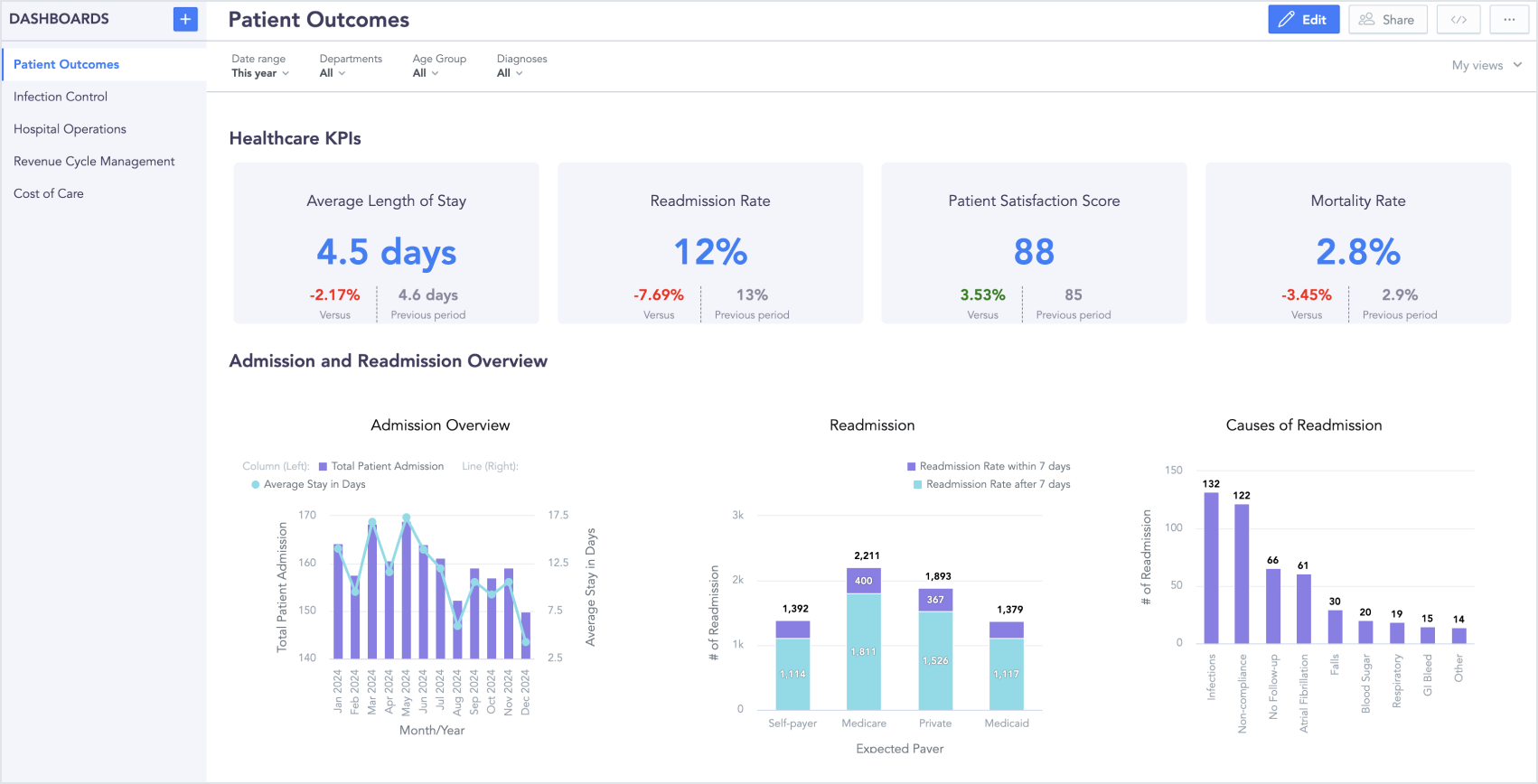
Technology plays a very important role in healthcare data management and analytics. Tools such as cloud computing, big data analytics, artificial intelligence, and business intelligence tools like Power BI and Tableau are commonly used. These tools help in data visualization, report generation, and performance analysis. Dashboards and reports help hospital management understand business performance easily.
However, healthcare data management also has some challenges. Data security and patient privacy are the biggest challenges. Healthcare organizations must follow data protection laws and ensure that patient data is secure. Another challenge is data integration because data comes from different departments such as billing, lab, pharmacy, and administration. Combining all this data into one system can be difficult. Data quality is also important because incorrect data can lead to wrong decisions.
Despite these challenges, healthcare data management and business analytics provide many benefits. It improves decision-making, reduces operational costs, increases hospital efficiency, improves patient care, and helps in business growth. Data-driven healthcare organizations can provide better services and compete better in the healthcare market.
In the future, healthcare analytics will become more advanced with the help of artificial intelligence and machine learning. Hospitals will be able to predict diseases, patient admissions, and treatment outcomes using predictive analytics. Real-time data analytics will help hospitals make quick decisions and improve emergency care services.