Hospital Operations Management System
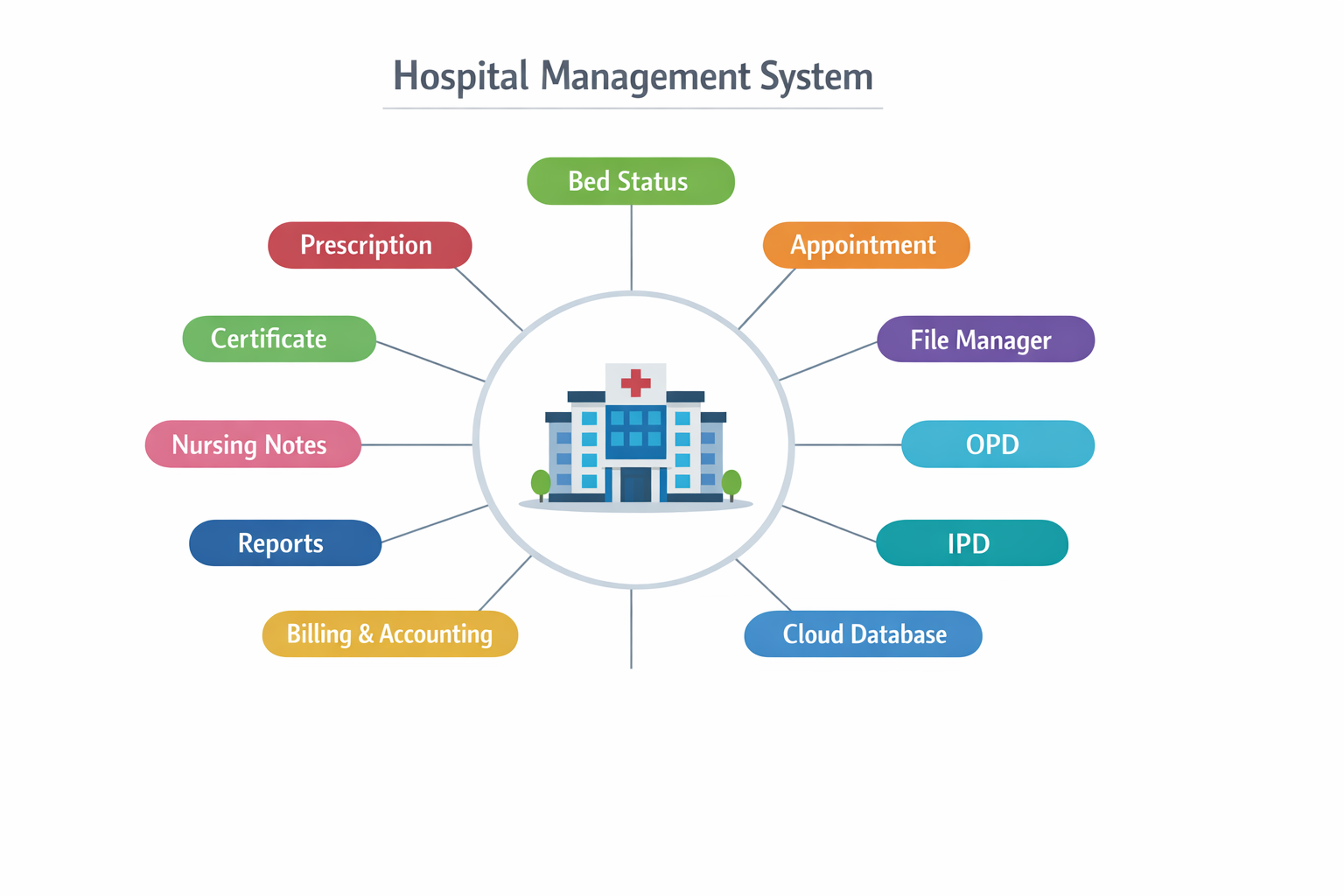
A Hospital Operations Management System (HOMS) is a digital platform designed to manage and automate the day-to-day operations of a hospital or healthcare facility. Hospitals are complex organizations where multiple departments such as reception, outpatient services, inpatient services, pharmacy, laboratory, billing, and administration must work together efficiently. Managing all these departments manually using paper records or basic spreadsheets can lead to delays, errors, and poor patient service. A Hospital Operations Management System helps hospitals streamline their operations, improve patient care, and manage data efficiently.
In traditional hospitals, patient records are often stored in physical files, appointment scheduling is done manually, and communication between departments is slow. This leads to long waiting times, misplaced records, billing errors, and inefficient use of hospital resources. A digital operations management system solves these problems by integrating all hospital departments into one centralized system. This allows hospital staff to access patient information, manage appointments, track bed availability, and monitor hospital resources in real time.
One of the most important features of a Hospital Operations Management System is patient management. The system stores patient details such as personal information, medical history, treatment records, prescriptions, and test reports in a digital database. This makes it easy for doctors and nurses to access patient records quickly and provide better treatment. It also reduces paperwork and helps in maintaining accurate patient history.
Another key function is appointment and scheduling management. Patients can book appointments online, and hospital staff can manage doctor schedules efficiently. The system helps avoid appointment conflicts and reduces patient waiting time. It also sends reminders to patients about their appointments, which helps reduce missed appointments.
The system also includes bed management and ward management. Hospitals need to track which beds are available, occupied, or reserved. With a digital system, hospital staff can easily manage bed allocation for patients and ensure proper utilization of hospital resources. This is especially important in large hospitals where hundreds of patients are admitted every day.
Billing and financial management is another major component of hospital operations. The system automatically generates bills based on treatments, tests, room charges, and medicines. This reduces billing errors and improves financial transparency. The system can also manage insurance claims and payment records, making the billing process faster and more accurate.
Inventory and pharmacy management is also included in the Hospital Operations Management System. Hospitals must maintain stock of medicines, equipment, and medical supplies. The system tracks inventory levels and alerts staff when stock is low. This helps prevent shortages of important medicines and equipment.
Laboratory management is another important module. The system manages lab test requests, test results, and report generation. Doctors can directly access lab reports from the system, which speeds up diagnosis and treatment. This improves overall patient care and hospital efficiency.
A Hospital Operations Management System provides many benefits to healthcare organizations. It improves operational efficiency, reduces paperwork, improves communication between departments, reduces errors, and improves patient satisfaction. It also helps hospital management in decision-making by providing reports and analytics such as number of patients, revenue, bed occupancy rate, and resource utilization.
However, there are some limitations of the system. The initial cost of implementing the system can be high. Staff need training to use the system properly. The system also requires proper data security and backup to protect patient information. If the system fails or there is a technical issue, hospital operations may be affected.
In the future, Hospital Operations Management Systems can be integrated with advanced technologies such as Artificial Intelligence, Internet of Things (IoT), cloud computing, and telemedicine. AI can help in predicting patient admission rates and resource requirements. IoT devices can monitor patient health in real time. Cloud technology can help in storing large amounts of hospital data securely. Telemedicine integration can allow doctors to consult patients remotely.