How AWS Is Helping Manage Healthcare Data: Transforming Data Into Better Patient Care
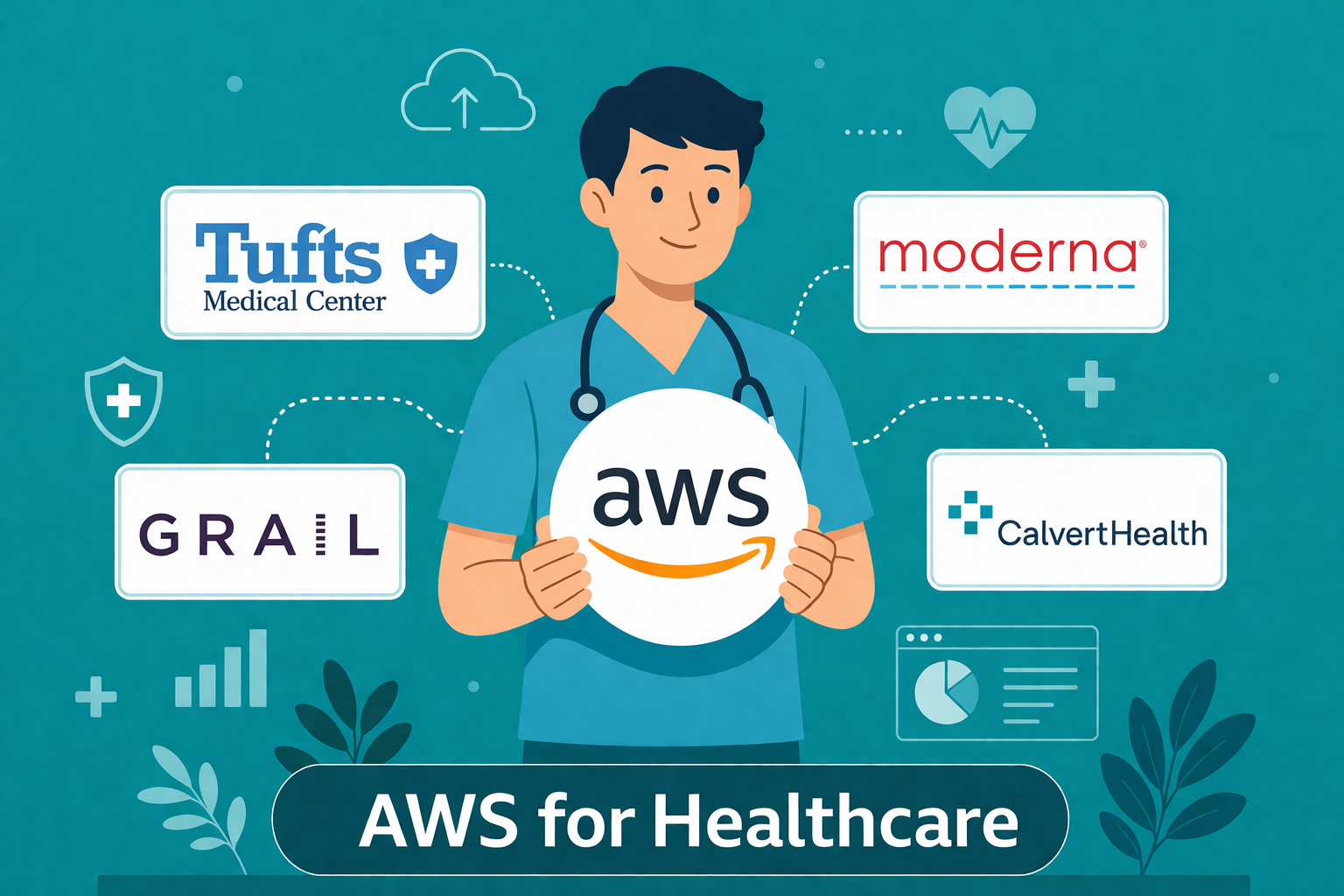
Healthcare organizations generate massive amounts of data every day. This includes electronic health records (EHRs), medical imaging, lab reports, prescriptions, insurance data, wearable device data, and even genomic data. Managing this data is one of the biggest challenges in modern healthcare. Hospitals often struggle with data stored in different systems, data security issues, and difficulty accessing patient information when needed.
This is where cloud platforms like Amazon Web Services (AWS) are playing a major role in transforming how healthcare data is stored, managed, and used. AWS provides healthcare organizations with secure cloud infrastructure, data platforms, analytics tools, and artificial intelligence services that help hospitals and healthcare providers manage data more efficiently and use it to improve patient care.
The Healthcare Data Problem
Before understanding how AWS helps, it is important to understand the problem. Healthcare data is complex and comes from many different sources. For example:
- Patient medical records
- Medical imaging such as X-rays, MRIs, and CT scans
- Laboratory test results
- Prescriptions and pharmacy data
- Insurance and billing data
- Data from wearable devices
- Genomic and research data
In many hospitals, these data systems are not connected. This creates data silos, meaning information is stored in separate systems that do not communicate with each other. Because of this, doctors may not have complete patient information, which can affect decision-making and patient care.
Another challenge is data security and privacy. Healthcare data is very sensitive and must be protected according to regulations such as HIPAA and other health data protection laws.
Healthcare organizations also need data analytics to predict diseases, improve hospital operations, reduce costs, and improve patient outcomes. Traditional IT systems often cannot handle such large and complex data.
AWS Healthcare Data Platforms
AWS has developed specialized healthcare data platforms that help organizations store, manage, and analyze healthcare data in a secure and scalable way. Some of the most important AWS healthcare data services include:
AWS HealthLake
AWS HealthLake is a cloud-based healthcare data platform that stores, organizes, and analyzes patient data. It converts healthcare data into a standard format called FHIR (Fast Healthcare Interoperability Resources), which allows different healthcare systems to share and access data easily.
With HealthLake, hospitals can:
- Store patient records securely in the cloud
- Search patient data quickly
- Use AI to analyze patient records
- Improve interoperability between systems
- Build analytics dashboards for healthcare insights
HealthLake makes it easier for doctors and healthcare organizations to access complete patient information in one place.
AWS HealthImaging
Medical imaging generates very large files such as X-rays, MRIs, CT scans, and ultrasound images. Storing and managing medical images is expensive and requires high storage capacity.
AWS HealthImaging helps healthcare organizations store, manage, and access medical images in the cloud. It also allows AI tools to analyze medical images for disease detection.
This helps radiologists and doctors access imaging data faster and use AI tools to assist in diagnosis.
AWS HealthOmics
Healthcare is moving toward personalized medicine and genomic research. Genomic data is extremely large and complex, and it requires high computing power for analysis.
AWS HealthOmics helps healthcare and research organizations store and analyze genomic data. It is used in drug discovery, cancer research, and precision medicine.
This platform helps researchers analyze DNA data and develop personalized treatments for patients.
Interoperability: Connecting Healthcare Systems
One of the biggest challenges in healthcare is interoperability, which means different systems should be able to share and use data together. Many hospitals use different software systems that do not communicate with each other.
AWS helps solve this problem by converting healthcare data into FHIR format, a global standard for healthcare data sharing. When data is in FHIR format, it can be shared between hospitals, clinics, laboratories, and insurance companies.
This allows:
- Doctors to access patient records from different hospitals
- Patients to move between hospitals without losing records
- Better coordination between healthcare providers
- Faster and more accurate treatment decisions
Interoperability is one of the most important goals in digital healthcare, and AWS is helping build the infrastructure for it.
AI and Analytics on Healthcare Data
Once healthcare data is stored in the cloud, it can be analyzed using artificial intelligence and analytics tools. AWS provides AI and machine learning services that help healthcare organizations:
- Predict patient risk
- Detect diseases early
- Analyze medical images
- Automate clinical documentation
- Optimize hospital operations
- Reduce readmissions
- Improve treatment planning
For example, AI can analyze patient records and predict which patients are at risk of readmission. Hospitals can then take preventive action, which improves patient outcomes and reduces costs.
Security and Compliance
Healthcare data must be highly secure. AWS provides strong security features such as:
- Data encryption
- Access control
- Identity management
- Compliance with healthcare regulations
- Secure data storage and backup
- Disaster recovery systems
This helps healthcare organizations protect sensitive patient data while still allowing authorized doctors and staff to access it when needed.
Benefits of AWS in Healthcare Data Management
Using AWS for healthcare data management provides many benefits:
| Benefit | Explanation |
|---|---|
| Scalability | Can store massive healthcare data |
| Security | Strong data protection |
| Interoperability | Systems can share data |
| AI & Analytics | Better insights and predictions |
| Cost Efficiency | No need for expensive local servers |
| Remote Access | Doctors can access data from anywhere |
| Backup & Recovery | Data is safe and recoverable |
The Future of Healthcare Data Management
In the future, healthcare will become more data-driven. Hospitals will use AI, cloud computing, big data analytics, and digital health platforms to improve patient care and hospital operations.
Cloud platforms like AWS will act as the data foundation for healthcare systems. Once data is organized and accessible, healthcare organizations can build AI applications, telemedicine platforms, remote monitoring systems, and digital health solutions on top of that data.