How Hospitals Reduce Waiting Time
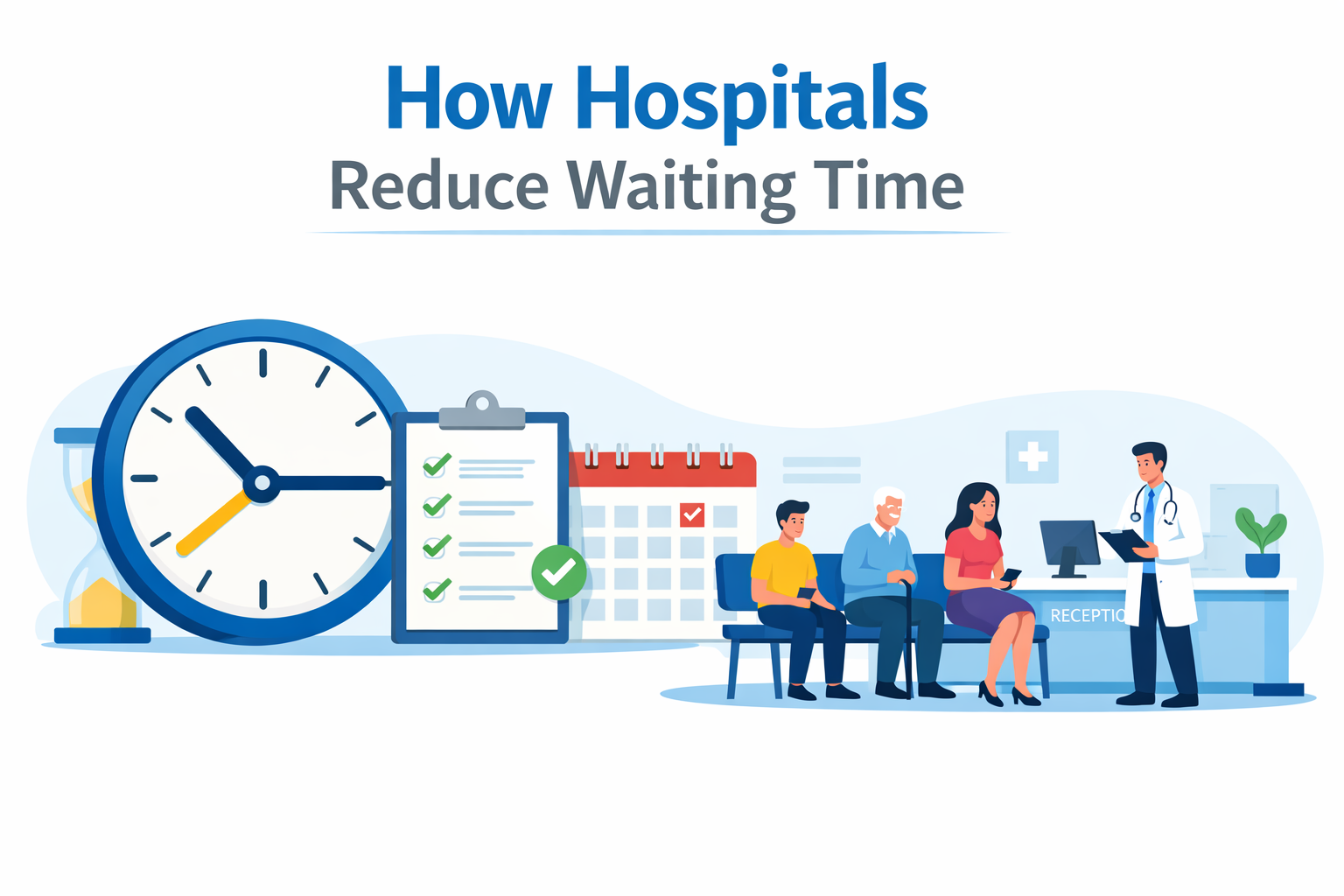
Long waiting times are one of the biggest problems in hospitals. Patients often have to wait for registration, consultation, tests, and billing. Hospitals use different management and technology methods to reduce waiting time and improve patient experience. Efficient hospital operations not only improve patient satisfaction but also help hospitals treat more patients in less time.
One of the main ways hospitals reduce waiting time is through appointment scheduling systems. Instead of walk-in patients only, hospitals allow patients to book appointments online or through phone calls. This helps hospitals manage patient flow and avoid overcrowding. Doctors can see patients according to a fixed schedule, which reduces long queues.
Another important method is patient triage. Triage means sorting patients based on the seriousness of their condition. Emergency patients are treated first, while patients with minor problems may wait longer. This system ensures that critical patients receive immediate treatment and doctors’ time is used efficiently.
Hospitals also use digital registration systems to reduce waiting time. Patients can register online before arriving at the hospital. Some hospitals use self-service kiosks where patients can check in by entering their ID or appointment number. This reduces the time spent standing in registration lines.
Queue management systems are also used in modern hospitals. Patients are given a token number, and digital screens show which patient will be seen next. This reduces confusion and crowding around consultation rooms and helps manage patient flow smoothly.
Another method is separate counters and departments. Many hospitals create different counters for billing, lab tests, pharmacy, and consultation. This prevents all patients from standing in one line and reduces waiting time.
Hospitals also reduce waiting time by improving internal communication between departments such as laboratory, pharmacy, and billing. When test reports are sent digitally to doctors, patients do not need to carry files from one department to another, which saves time.
Electronic Health Records (EHR) also help reduce waiting time. Doctors can quickly access patient history, previous reports, and prescriptions, so they do not need to ask the same questions again or search for paper files.
Hospitals also use AI-based scheduling systems in advanced healthcare facilities. These systems predict patient flow, busy hours, and doctor availability, helping hospitals plan staff schedules and reduce overcrowding.
Pharmacy management systems also reduce waiting time. Digital prescriptions are sent directly to the pharmacy, and medicines are prepared before the patient arrives, reducing waiting time at the pharmacy counter.