Indian States Expand Radiology AI Adoption; AIIMS Delhi Launches VR Training Centre
India’s public healthcare system is accelerating its adoption of advanced technologies, with multiple state governments rolling out AI-powered diagnostic tools while leading institutions invest in next-generation medical training infrastructure.
Madhya Pradesh Pilots AI Radiology Across District Hospitals
The Madhya Pradesh government has initiated a pilot programme deploying AI-enabled radiology tools across 10 district hospitals in partnership with mlHealth360.
The initiative introduces a cloud-based AI platform designed to analyse CT scans, detect abnormalities, and generate standardised radiology reports. Integrated with existing PACS and RIS systems, the solution aims to enhance clinical workflows and accelerate decision-making.
The technology is expected to support early diagnosis of critical conditions such as stroke, haemorrhage, trauma, and tumours, while automatically prioritising urgent cases to enable faster medical intervention.
The rollout will follow a phased approach, beginning with site readiness assessments and system integration, followed by clinician training and full deployment. Outcomes from the pilot will guide potential expansion across the state.
Telangana Launches AI-Powered Lung Cancer Screening Programme
In parallel, the Telangana government has introduced a statewide AI-driven lung cancer screening programme in collaboration with AstraZeneca Pharma India.
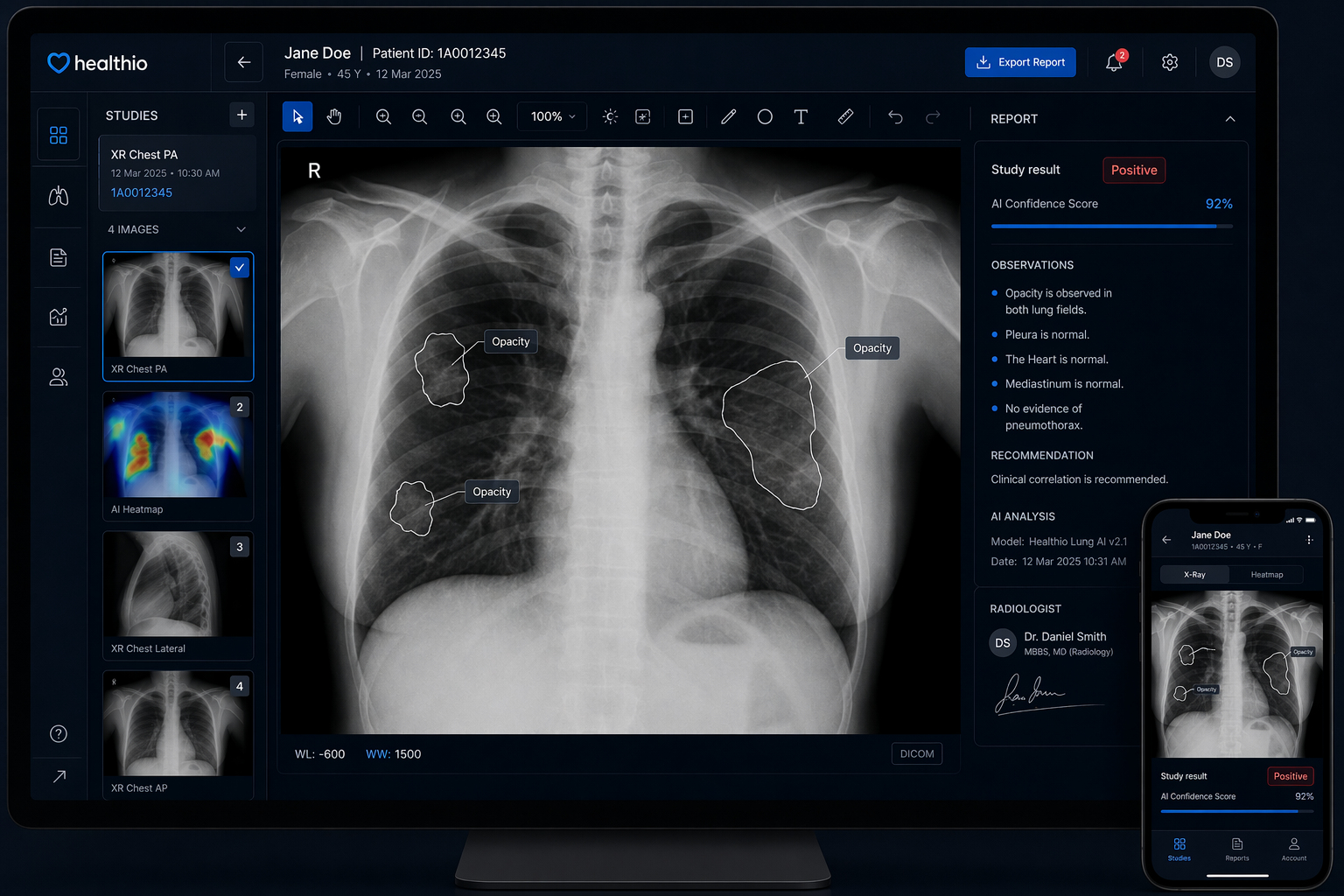
The programme integrates chest X-ray analysis technology from Qure.ai into routine clinical workflows across 20 public healthcare facilities in both urban and rural regions.
The AI system is designed to detect pulmonary nodules and other lung abnormalities, triage high-risk patients, and support timely follow-up diagnostics.
The initiative comes amid rising cancer incidence in the state. According to projections from the Indian Council of Medical Research–National Centre for Disease Informatics and Research, Telangana’s cancer burden is expected to increase further by 2030.
Similar AI-based screening initiatives have already been implemented in states such as Goa, Tamil Nadu, and Karnataka as part of broader efforts to improve early cancer detection.
AIIMS Delhi Introduces Virtual Reality Training Centre
Meanwhile, All India Institute of Medical Sciences has launched a virtual reality (VR) training centre at its Skills, e-Learning, and Telemedicine (SET) facility in New Delhi.
Developed in collaboration with MediSim VR, the centre will focus on evaluating immersive learning and simulation-based training methods through structured research.
The institute plans to integrate VR into medical and nursing education, supporting competency-based training, standardisation, and improved learning outcomes.
A Broader Digital Health Transformation
These initiatives reflect a broader push across India to modernise healthcare delivery through artificial intelligence and immersive technologies. From enhancing diagnostic accuracy to transforming clinical training, the integration of advanced tools is expected to improve access, efficiency, and patient outcomes across the healthcare ecosystem.