
National University Hospital Launches Innovation Hub to Accelerate AI and Digital Health Solutions
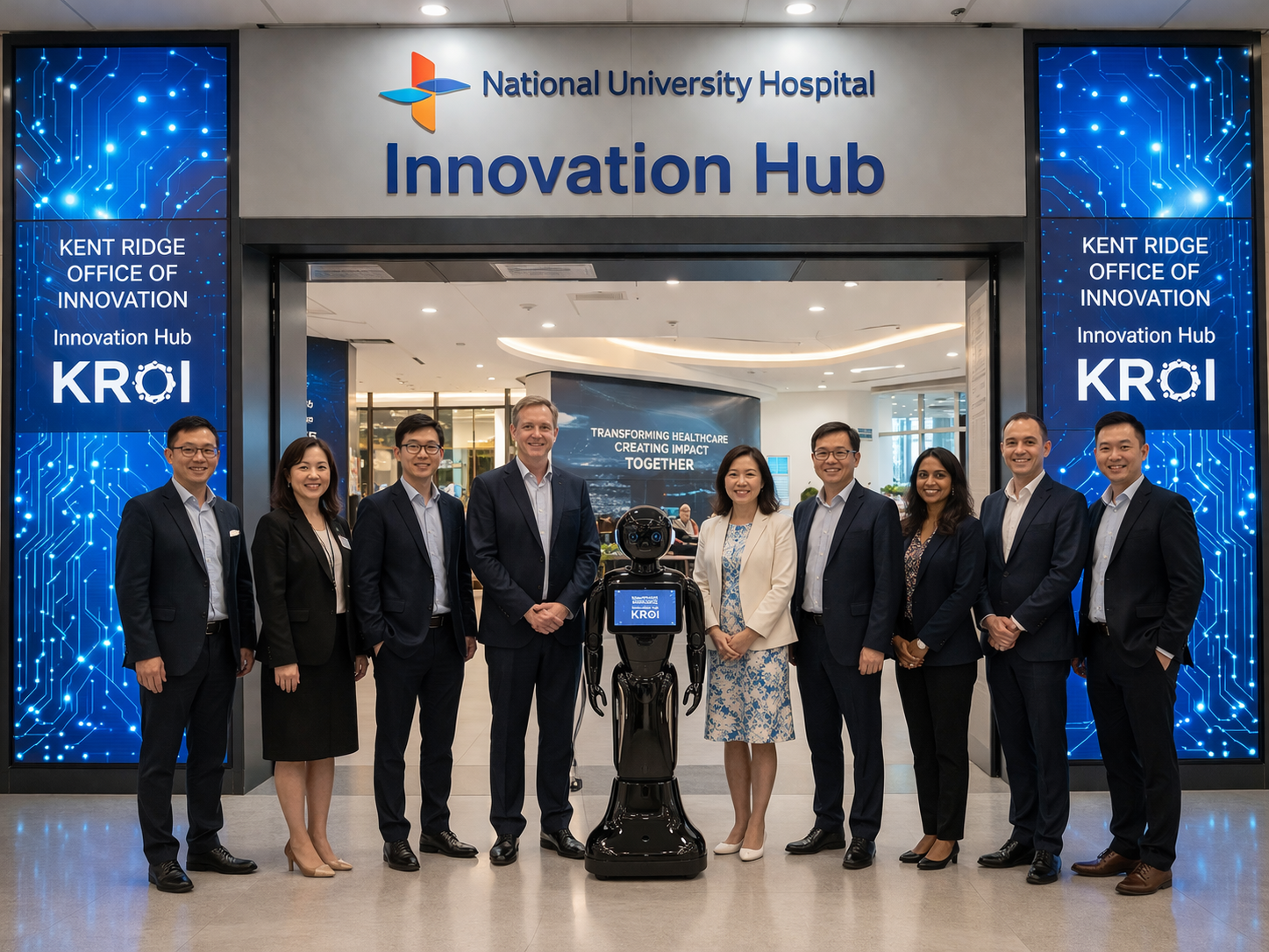
National University Hospital (NUH) has launched a new Innovation Hub designed to serve as both an incubator and a real-world sandbox for testing, validating, and scaling artificial intelligence and digital health solutions in live clinical environments.
The hub, developed under the NUH Kent Ridge Office of Innovation (KROI), brings together clinicians, startups, academic institutions, and industry partners to co-develop healthcare technologies and test them directly within NUH’s clinical settings. The initiative comes as Singapore’s healthcare system faces growing pressure from an ageing population, increasing care complexity, and ongoing workforce shortages.
A Real-World Sandbox for Healthcare Innovation
The NUH Innovation Hub operates through a structured innovation pathway known as IMPEL — Ideate, Model, Prototype, Evaluate, Launch. Solutions enter the program through clearly defined clinical or operational problem statements identified by hospital teams or through strategic partnerships.
Once onboarded, technologies are tested in NUH’s live care environment using a “trial-of-trial” model. This allows startups and technology partners to validate their solutions in real workflows while receiving direct feedback from clinicians and operational staff. All trials are conducted under NUH’s legal, clinical, and data governance frameworks to ensure safety, compliance, and accountability from the early stages.
Solutions that demonstrate clinical relevance, operational feasibility, and alignment with healthcare priorities are then considered for broader deployment across the health system.
Early Innovations Showing Results
Several internally developed solutions are already demonstrating operational benefits. These include MedBot, a virtual pharmacy assistant that has reduced workload by saving approximately 28 man-hours per month, and the ED Summarizer, an AI tool that has cut clinical documentation time by at least half.
The hub also functions as a validation site for startups through collaboration with the Infocomm Media Development Authority via its Open Innovation Platform, which helps identify and pilot solutions for real healthcare challenges.
Partnerships and Training Programs
The innovation hub is supported by multiple research and industry partnerships. NUH is collaborating with Elsevier to study how clinicians use AI-powered medical information tools. It is also working with the National University of Singapore College of Design and Engineering to strengthen innovation capabilities and train future healthcare technology talent.
In addition, the hub will house the Singapore office of the Singapore-Shanghai Medical Innovation Centre, a joint initiative with Ruijin Hospital focused on innovations such as CAR T-cell therapy and 3D-printed orthopaedics.
More than 3,400 NUH staff have already completed innovation-related training programs, highlighting the hospital’s focus on building internal capabilities alongside external innovation partnerships.
Focus on Scalable Healthcare Innovation
According to NUH leadership, one of the biggest challenges in healthcare innovation is not developing new technology, but scaling it beyond pilot projects. Many technologies perform well in trials but fail to integrate into real clinical workflows or gain clinician trust.
To address this, the NUH Innovation Hub focuses on early integration planning, governance alignment, and change management to ensure successful adoption at scale. NUH is also working with government agencies and health system partners to deploy successful innovations across the wider National University Health System (NUHS).
Future Focus Areas
Over the next two to three years, the hub will focus on applied innovation projects with measurable impact, particularly in areas such as robotics and automation, digital twins for healthcare planning, Internet of Things (IoT) healthcare systems, and data-driven decision support tools.
The NUH Innovation Hub represents a growing trend in healthcare where hospitals are no longer just care providers but also innovation platforms. By testing technologies in real clinical environments and focusing on scalability from the start, NUH aims to accelerate the adoption of AI and digital health solutions that improve operational efficiency, workforce sustainability, and patient experience.


