Pancreatic Cancer Treatment Is Changing for the Better
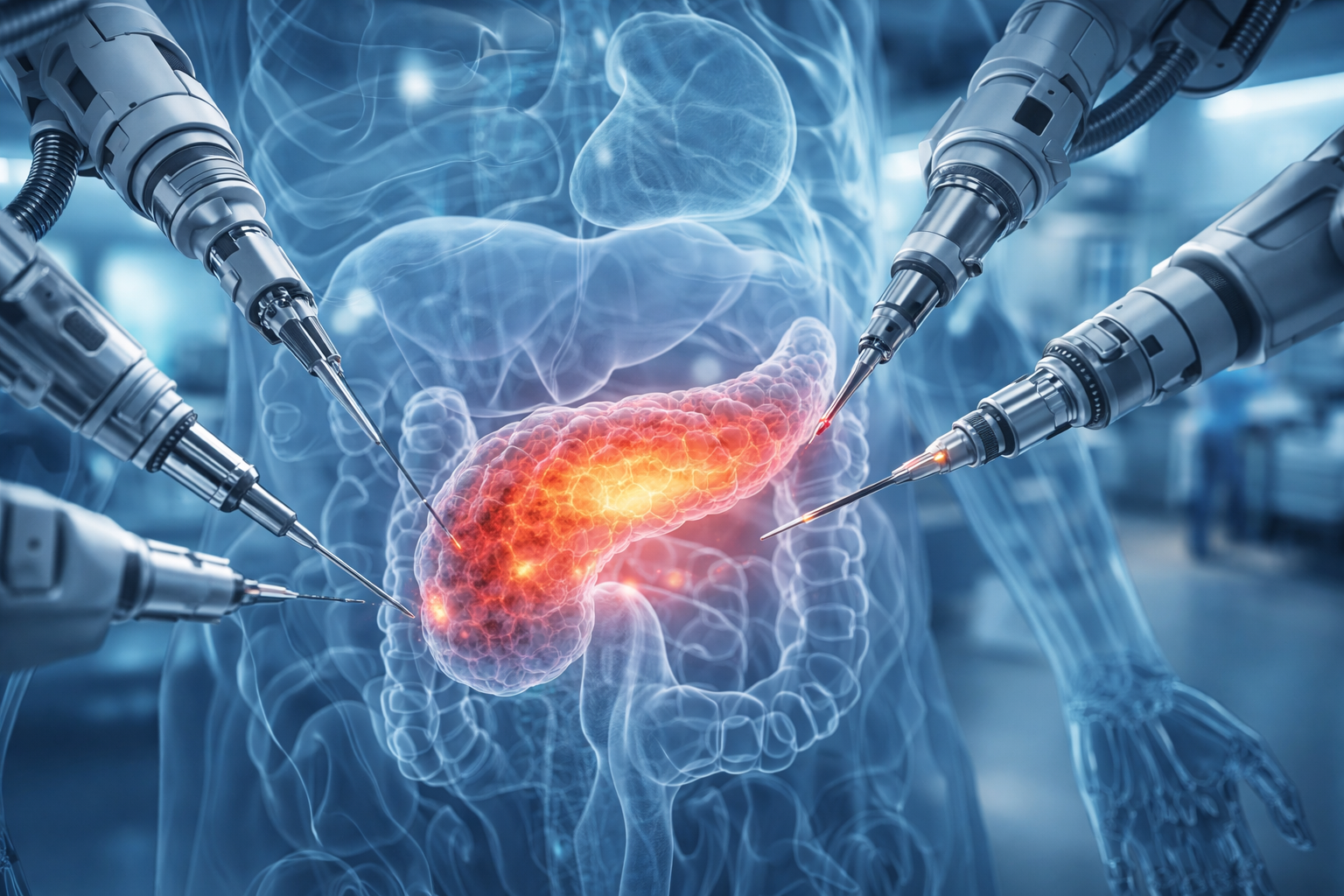
Pancreatic cancer has long been considered one of the most difficult cancers to treat. While many other cancers have seen major improvements in survival rates over the past few decades, pancreatic cancer survival rates have remained low. In fact, the mortality rate for pancreatic cancer has continued to rise, even as treatments for other cancers have improved. However, recent developments in surgical techniques, robotic surgery, and cancer vaccines are beginning to change the future of pancreatic cancer treatment.
Pancreatic ductal adenocarcinoma (PDAC) is the most common type of pancreatic cancer and accounts for about 90% of all pancreatic cancer cases. One of the biggest challenges with pancreatic cancer is that it is often detected very late. By the time symptoms appear, the cancer has usually already spread, making treatment more difficult. Even today, the average survival time for many pancreatic cancer patients is still very low, which shows how serious and aggressive this disease is.
For many years, one of the main surgical treatments for pancreatic cancer has been the Whipple procedure, also known as pancreaticoduodenectomy. This surgery was first developed in 1935 and is still one of the most common treatments used today. The Whipple procedure is a very complex operation that involves removing part of the pancreas, small intestine, and other nearby organs. Over time, surgeons have improved this procedure and reduced the risks associated with it, but it still remains a challenging surgery.
Recent studies have shown that surgery can significantly improve survival for pancreatic cancer patients, especially when the cancer is detected in the early stages. Research comparing patients who had surgery with those who did not showed that patients who underwent surgery lived longer on average. However, the success of surgery depends heavily on selecting the right patients and ensuring that the cancer is completely removed. If cancer remains in the body after surgery, the survival benefit may be limited.
One of the most important recent advancements in pancreatic cancer surgery is the use of robotic surgery for the Whipple procedure. Robotic surgery allows surgeons to perform complex operations with greater precision and control. The robotic system provides better visualization and allows surgeons to perform delicate procedures more accurately. Compared to traditional open surgery and laparoscopic surgery, robotic surgery has been associated with fewer complications, less blood loss, and shorter hospital stays for patients.
Although robotic surgery takes longer to perform than traditional surgery, studies have shown that patients often recover better after robotic procedures. However, robotic surgery is not suitable for every patient, and surgeons must carefully select patients based on their condition and anatomy. Robotic surgery also requires specialized training, and experts warn that hospitals should not adopt robotic surgery too quickly without proper training and experience.
Another major development in pancreatic cancer treatment is the use of cancer vaccines. Even after surgery, pancreatic cancer often returns because cancer cells may still remain in the body in very small amounts. These tiny cancer cells can spread and cause the cancer to return later. Scientists are now developing vaccines that train the immune system to recognize and destroy pancreatic cancer cells.
Researchers discovered that some pancreatic cancer patients who survive for a long time have strong immune responses against their cancer. This led scientists to believe that if the immune system can be trained to recognize pancreatic cancer cells, it may be possible to prevent the cancer from coming back. This idea led to the development of personalized cancer vaccines.
In one clinical trial, patients who had pancreatic cancer surgery were given a personalized mRNA vaccine designed specifically for their tumor. The vaccine helped the immune system recognize cancer cells and attack them. The results of the trial showed that some patients developed strong immune responses, and these patients had a longer period without cancer recurrence compared to patients who did not respond to the vaccine. This shows that cancer vaccines could play an important role in pancreatic cancer treatment in the future.
Another type of vaccine being developed targets a specific mutation called KRAS, which is present in about 90% of pancreatic cancer cases. Researchers believe that targeting this mutation could help stop cancer growth and prevent recurrence. Early clinical trials of KRAS-targeted vaccines have shown promising results, and researchers are continuing to study this treatment in larger trials.
Scientists believe that cancer vaccines may be especially effective after surgery, when only very small cancer cells remain in the body. At this stage, the immune system may be able to destroy the remaining cancer cells more effectively. Researchers are now conducting more clinical trials to test whether cancer vaccines can improve survival rates for pancreatic cancer patients.
Overall, pancreatic cancer treatment is slowly improving due to advances in surgery, robotic technology, and immunotherapy. While pancreatic cancer is still a very serious disease, new technologies and research are providing hope for better treatment options and improved survival in the future. Scientists believe that combining surgery, chemotherapy, and cancer vaccines may provide better results for patients in the coming years.