Singapore Initiative Uses Tech-Enabled Preventive Care to Support Children from Lower-Income Families
A collaborative programme led by National University Hospital is leveraging digital tools to deliver more personalised preventive healthcare for children from lower-income households, with early results showing improved follow-through on care recommendations.
The initiative, known as HEADS-UPP (Health and Development Support in Preschool Partnerships), brings together healthcare providers, educators, and social services to identify risks early and guide families toward timely intervention. It is delivered in partnership with Care Corner Singapore and PAP Community Foundation Sparkletots Preschool.
Tele-dentistry driving early impact
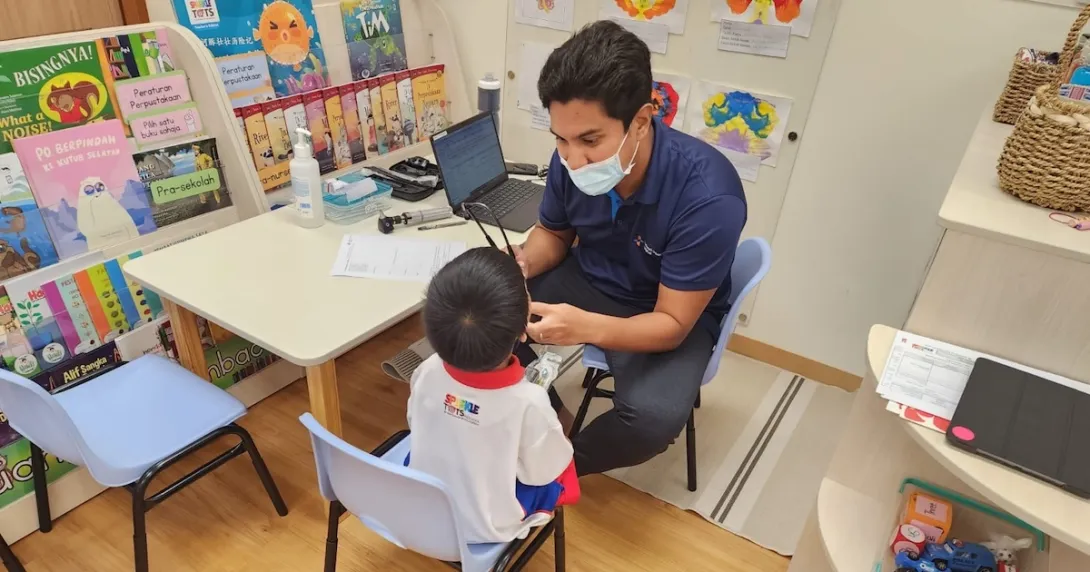
One of the programme’s key innovations is a tele-dentistry model designed to address gaps in preventive dental care. The project combines on-site screenings at preschools with remote specialist evaluations, supported by academic partners including the National University of Singapore Faculty of Dentistry and the National University Centre for Oral Health Singapore.
Under the model, healthcare staff capture intraoral images of children’s teeth while parents provide risk-related information through questionnaires. A paediatric dentist then reviews the data remotely and generates a personalised report outlining risk levels and recommended next steps.
Early findings highlight a significant improvement in care follow-through. Among children identified with dental issues, 57.5% received specialist care within four to six months—up from just 13.3% in earlier studies involving similar demographics. Additionally, the proportion of children classified as moderate to high risk declined after families received tailored guidance.
Addressing systemic barriers
The programme is built on the recognition that preventive care is often deprioritized in lower-income households due to time constraints, access challenges, and competing responsibilities. By embedding services within preschools, HEADS-UPP ensures earlier intervention—before issues escalate into more serious health concerns.
Rather than relying solely on technology, the initiative integrates digital tools with human support systems. Shared platforms, digital records, and tele-access enable coordination between healthcare providers, educators, and social workers, reducing duplication and improving continuity of care.
Programme leaders emphasize that technology acts as an enabler—not a replacement—for human engagement. Trust-building, case management, and decision-making around sensitive social issues remain dependent on professionals who understand each family’s context.
Expanding the model
Looking ahead, HEADS-UPP is exploring additional innovations, including AI-assisted dental screening and tele-coaching tools aimed at supporting early childhood development. The programme is also evaluating structured, risk-based care pathways and digital prompts to help families take actionable steps toward better health outcomes.
Since its launch in 2022, the initiative has reached more than 400 children and trained over 160 professionals in interdisciplinary care, reflecting growing momentum behind integrated, tech-enabled approaches to preventive healthcare.
As healthcare systems globally look to improve access and equity, programmes like HEADS-UPP demonstrate how combining digital innovation with community-based support can drive meaningful improvements in early intervention and long-term health outcomes.