Smart Hospitals Using IoT
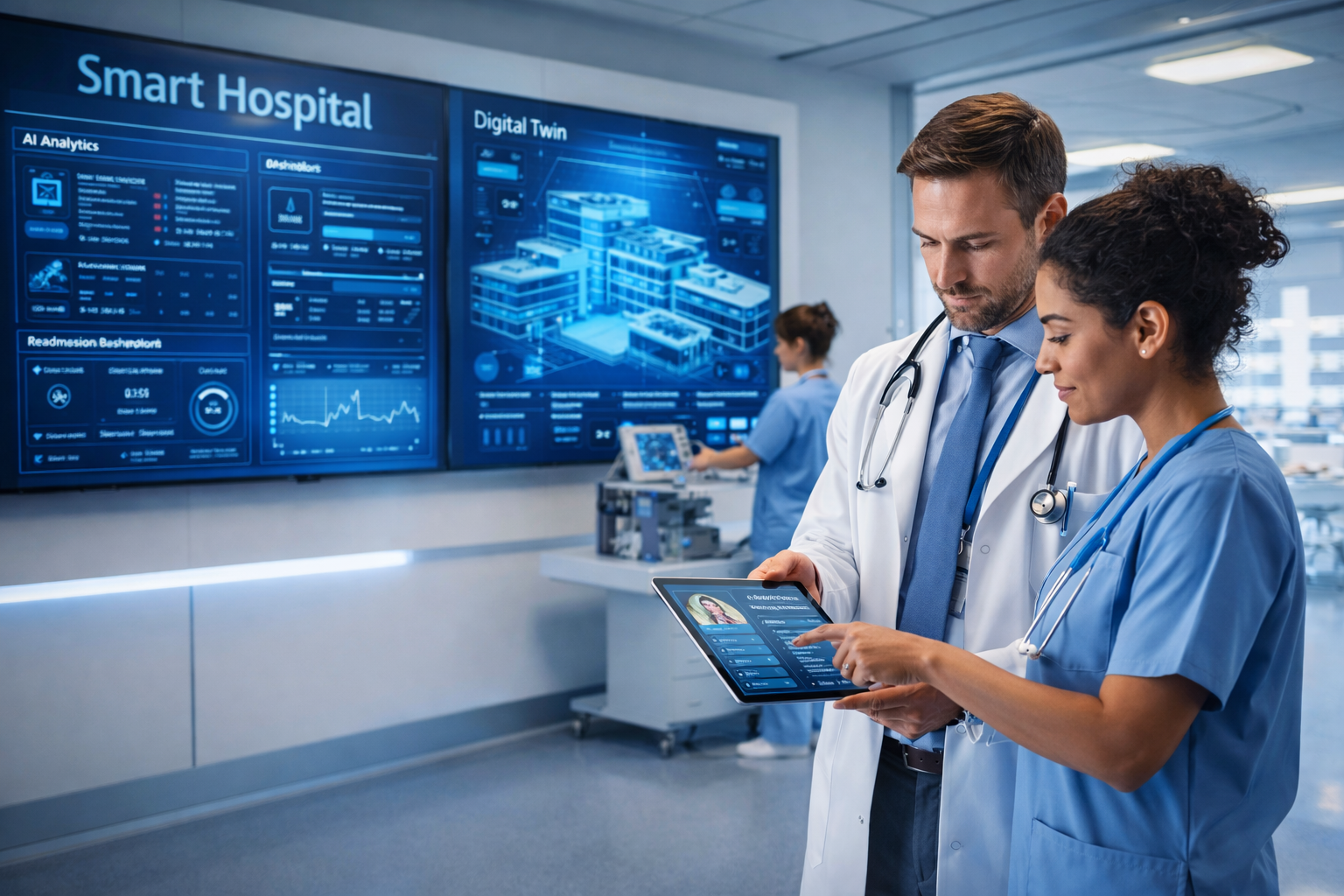
The healthcare industry is undergoing a major transformation with the introduction of smart technologies, and one of the most important technologies driving this change is the Internet of Things (IoT). Smart hospitals use IoT devices and connected systems to improve patient care, enhance operational efficiency, reduce costs, and support better decision-making. In simple terms, a smart hospital is a healthcare facility where medical devices, systems, and people are connected through the internet to share data and automate processes.
The Internet of Things refers to a network of connected devices that collect, send, and receive data through the internet without human intervention. In hospitals, IoT includes devices such as patient monitoring systems, smart beds, wearable devices, connected medical equipment, asset tracking systems, and environmental sensors. These devices collect real-time data and help healthcare providers monitor patients, manage equipment, and improve hospital operations.
One of the most important applications of IoT in smart hospitals is remote patient monitoring. IoT-enabled devices can continuously monitor a patient’s vital signs such as heart rate, blood pressure, oxygen level, temperature, and respiratory rate. This data is sent directly to hospital systems where doctors and nurses can monitor patients in real time. If any abnormal readings are detected, alerts are sent automatically to healthcare staff. This helps in early detection of health problems and reduces the risk of medical emergencies.
IoT is also transforming hospital asset management. Hospitals have thousands of medical devices such as wheelchairs, infusion pumps, ventilators, and monitors. It is often difficult to track where these devices are located, and staff may waste time searching for equipment. IoT-based asset tracking systems use RFID tags and sensors to track equipment in real time. Hospital staff can quickly locate equipment using a computer or mobile device, which saves time and improves efficiency.
Another important use of IoT in smart hospitals is smart beds. Smart hospital beds are equipped with sensors that can monitor patient movement, heart rate, and sleep patterns. These beds can automatically adjust their position to improve patient comfort and prevent bedsores. They can also detect if a patient is trying to leave the bed and send an alert to nurses to prevent falls, especially for elderly patients.
IoT also helps in medication management. Smart medication systems can track when a patient receives medication and ensure the correct dosage is given at the correct time. This reduces medication errors, which are one of the major challenges in hospitals. IoT-enabled medication cabinets can also track drug inventory and automatically notify staff when stock is low.
Environmental monitoring is another important application of IoT in hospitals. Hospitals must maintain specific temperature and humidity levels in areas such as operating rooms, laboratories, and medicine storage rooms. IoT sensors can continuously monitor environmental conditions and send alerts if conditions go outside safe limits. This helps protect sensitive medicines, vaccines, and medical equipment.
Smart hospitals also use IoT for energy management. Hospitals consume a large amount of electricity for lighting, air conditioning, medical equipment, and other systems. IoT-based energy management systems can monitor energy usage and automatically control lighting, temperature, and equipment usage to reduce energy consumption. This helps hospitals reduce operational costs and improve sustainability.
One of the biggest advantages of IoT in smart hospitals is data collection and analytics. IoT devices generate a large amount of data, which can be analyzed to improve hospital operations and patient care. For example, hospitals can analyze patient data to predict which patients are at risk of complications. They can also analyze equipment usage data to optimize resource allocation and reduce waiting times.
IoT also supports telemedicine and remote healthcare services. Wearable devices and home monitoring systems allow doctors to monitor patients remotely without requiring them to visit the hospital. This is especially useful for patients with chronic diseases such as diabetes, heart disease, and hypertension. Remote monitoring reduces hospital visits, saves time, and improves patient convenience.
However, implementing IoT in hospitals also comes with challenges. One major challenge is cybersecurity. IoT devices are connected to the internet, which makes them vulnerable to cyberattacks. If hackers gain access to hospital systems, they could steal patient data or disrupt hospital operations. Therefore, hospitals must implement strong cybersecurity measures to protect IoT devices and data.
Another challenge is data privacy. IoT devices collect sensitive patient data, and hospitals must ensure that this data is stored and transmitted securely. Hospitals must follow data protection regulations and ensure that patient data is not misused.
Cost is also a challenge for some hospitals. Implementing IoT systems requires investment in devices, network infrastructure, software, and training. However, in the long term, IoT can reduce costs by improving efficiency, reducing errors, and optimizing resource usage.
Integration is another challenge. Hospitals already use many different systems such as electronic health records, laboratory systems, and billing systems. IoT systems must be integrated with these existing systems to ensure smooth data flow and effective use of information.
Despite these challenges, the future of smart hospitals using IoT looks very promising. In the future, IoT will be combined with artificial intelligence, robotics, and big data analytics to create fully intelligent hospitals. AI systems will analyze IoT data to predict diseases, recommend treatments, and automate hospital operations. Robots connected through IoT networks may assist in surgeries, deliver medicines, and transport equipment within hospitals.
Smart hospitals will also focus more on patient-centered care. IoT devices will allow patients to be monitored continuously, and doctors will be able to provide personalized treatment based on real-time data. This will improve patient outcomes and reduce hospital readmissions.