The Rise of “Invisible Healthcare”: Care Without Hospital Visits
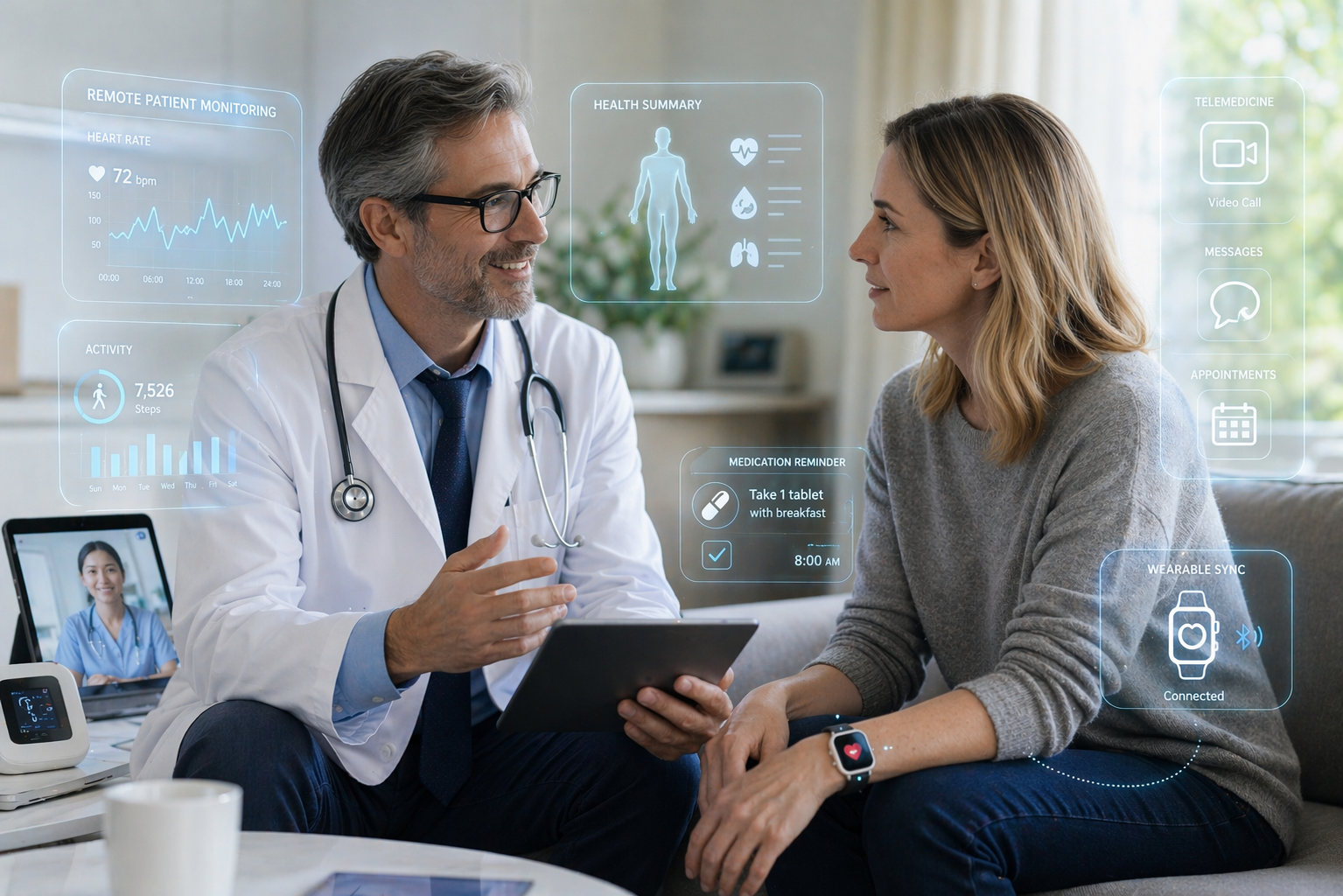
Healthcare is quietly moving out of hospitals and into the background of everyday life. What once required appointments, travel, and physical interaction is increasingly happening through connected systems, digital platforms, and continuous monitoring. This shift is giving rise to what can be described as “invisible healthcare”—a model where care is delivered without the need for traditional hospital visits, often without patients even realizing that medical intervention is taking place.
For decades, healthcare has been built around a physical infrastructure. Hospitals and clinics have served as the central hubs where diagnosis, treatment, and follow-up care occur. Patients move through this system in defined episodes: a consultation, a test, a procedure, and then discharge. While this model has enabled remarkable advances in medicine, it is inherently reactive. It depends on patients recognizing symptoms, seeking care, and navigating a system that is often complex and time-consuming.
Invisible healthcare represents a fundamental shift from this episodic model to one that is continuous and proactive. Instead of waiting for illness to manifest, healthcare systems are beginning to monitor patients in real time, identify risks early, and intervene before conditions escalate. This transition is not just a technological evolution; it is a redefinition of how care is delivered, experienced, and managed.
At the heart of this transformation is the growing ability to collect and analyze health data outside clinical settings. Wearable devices, smart sensors, and connected home technologies are generating a constant stream of physiological data. Heart rate, activity levels, sleep patterns, glucose levels, and even subtle changes in movement or behavior can now be tracked continuously. This data provides a far more comprehensive picture of a patient’s health than occasional clinical visits ever could.
What makes this data valuable is not just its volume, but the intelligence applied to it. Advanced analytics and artificial intelligence systems can identify patterns, detect anomalies, and predict potential health issues. A slight irregularity in heart rhythm, a gradual increase in blood pressure, or a change in respiratory patterns can trigger alerts that prompt early intervention. In many cases, this happens before the patient experiences any noticeable symptoms.
This capability is particularly transformative for chronic disease management. Conditions such as diabetes, cardiovascular disease, and respiratory disorders require ongoing monitoring and adjustment. Traditionally, patients would visit their healthcare provider periodically, and treatment decisions would be based on limited snapshots of data. With invisible healthcare, clinicians have access to continuous insights, enabling more precise and timely interventions. Patients, in turn, benefit from a level of care that is more responsive and personalized.
Telehealth has played a significant role in accelerating this shift. Virtual consultations have removed geographical barriers, making it easier for patients to access care without traveling to a facility. However, telehealth is only one component of invisible healthcare. The real transformation lies in the integration of monitoring, analytics, and automated workflows that operate behind the scenes. In this model, a virtual consultation may only occur when it is needed, triggered by data rather than scheduled as a routine.
Another critical dimension of invisible healthcare is its impact on patient experience. Traditional healthcare journeys can be fragmented and stressful, involving long wait times, administrative hurdles, and uncertainty. By contrast, invisible healthcare is designed to be seamless and unobtrusive. Patients receive care in the context of their daily lives, without the disruption of frequent hospital visits. Notifications, reminders, and interventions are delivered through familiar digital channels, creating a more intuitive and user-friendly experience.
This shift also has significant implications for healthcare providers and systems. Hospitals are under increasing pressure to manage costs, improve outcomes, and optimize resource utilization. By reducing unnecessary visits and hospitalizations, invisible healthcare can alleviate some of this pressure. Early intervention helps prevent complications, reducing the need for intensive and expensive treatments. At the same time, remote monitoring and automation allow healthcare professionals to focus their time and expertise where it is most needed.
However, the transition to invisible healthcare is not without challenges. One of the most pressing issues is data integration. Healthcare data is often fragmented across multiple systems, making it difficult to create a unified view of the patient. Achieving true invisibility requires seamless interoperability between devices, platforms, and providers. Without this integration, the full potential of continuous monitoring and predictive analytics cannot be realized.
Privacy and security are also critical concerns. Invisible healthcare relies on the collection and analysis of sensitive personal data, often in real time. Ensuring that this data is protected and used responsibly is essential to maintaining patient trust. Robust governance frameworks, encryption technologies, and clear consent mechanisms are necessary to address these concerns.
There is also a human dimension to consider. While technology enables invisible healthcare, it cannot replace the need for human connection and clinical judgment. Patients still value the reassurance and empathy that come from interacting with healthcare professionals. The challenge is to strike the right balance, using technology to enhance care without making it feel impersonal or distant.
Accessibility is another important factor. While digital health technologies are becoming more widespread, not all patients have equal access to devices, connectivity, or digital literacy. Ensuring that invisible healthcare benefits all segments of the population requires thoughtful design and inclusive implementation strategies.
Despite these challenges, the trajectory of healthcare is clearly moving toward greater integration, automation, and decentralization. Invisible healthcare is not about eliminating hospitals but about redefining their role. Hospitals will continue to be essential for acute care, complex procedures, and specialized treatment. However, much of routine care will shift away from these settings, becoming embedded in the patient’s everyday environment.
Looking ahead, the concept of invisible healthcare is likely to evolve further. Advances in artificial intelligence, biosensors, and digital therapeutics will enable even more sophisticated monitoring and intervention. Personalized care plans could be continuously adjusted based on real-time data, creating a dynamic and adaptive healthcare experience. Preventive care will become more prominent, with systems designed to maintain health rather than simply treat illness.
In this emerging model, healthcare becomes less visible but more present. It operates quietly in the background, supporting individuals without demanding their attention unless necessary. The ultimate goal is a system where care is not something people seek out, but something that seamlessly supports them throughout their lives.
The rise of invisible healthcare represents a profound shift in how we think about health and care delivery. By moving beyond the confines of hospitals and into the fabric of daily life, it has the potential to improve outcomes, enhance experiences, and create a more sustainable healthcare system.