Will AI Replace Doctors? The Future of Artificial Intelligence in Healthcare
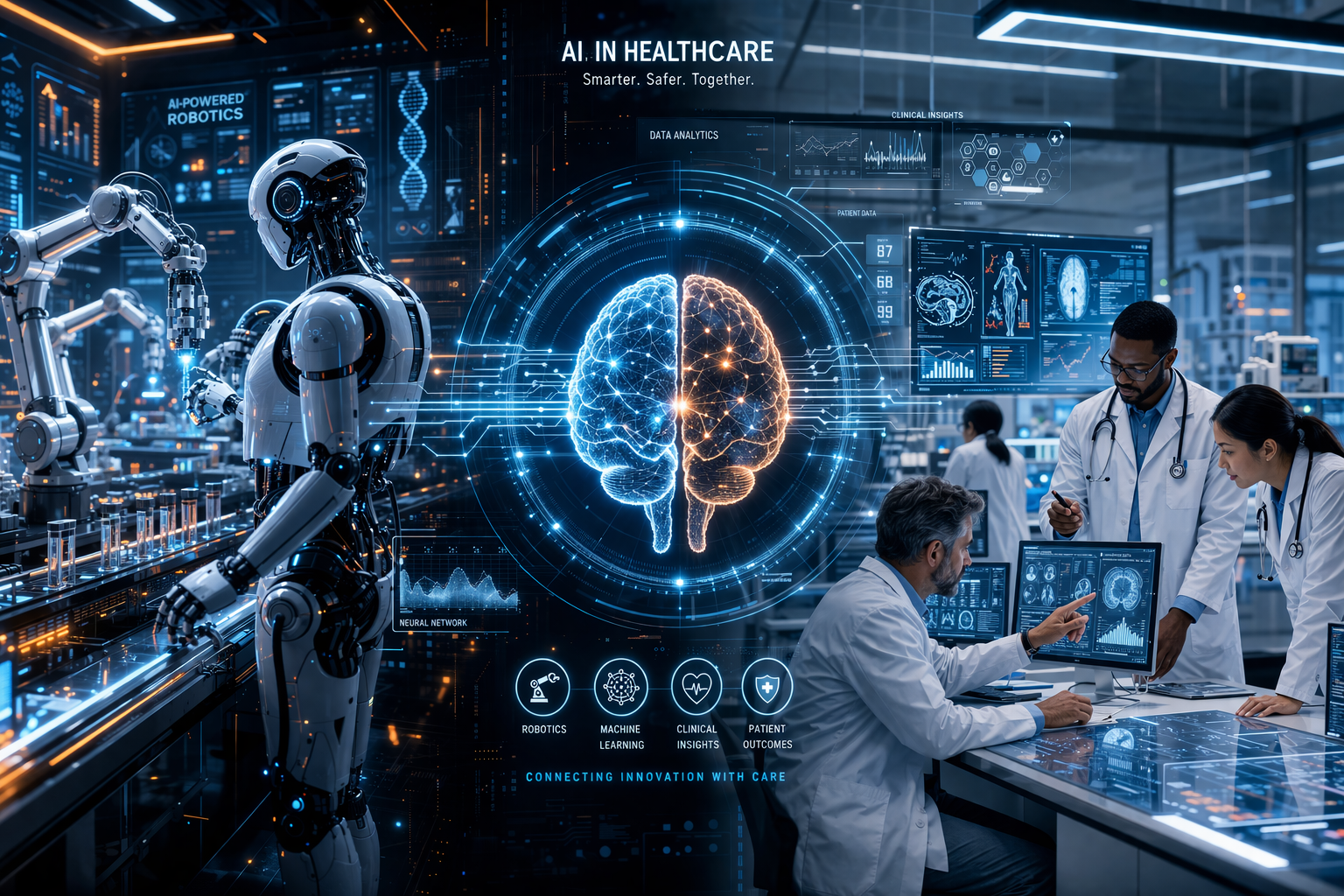
Artificial intelligence is rapidly transforming healthcare. From diagnosing diseases and analyzing medical images to automating administrative tasks and assisting in surgery, AI is becoming an important part of modern healthcare systems. As AI technology becomes more advanced, one question is being asked more frequently: Will AI replace doctors?
The short answer is no — AI will not replace doctors. However, AI will change the way doctors work, the way hospitals operate, and the way patients receive care. Instead of replacing doctors, AI will become a powerful tool that supports doctors, improves decision-making, reduces workload, and makes healthcare more efficient.
To understand why AI will not replace doctors, we need to understand what doctors actually do and what AI can and cannot do.
What AI Is Good At in Healthcare
Artificial intelligence is very good at analyzing large amounts of data quickly. In healthcare, this includes medical images, patient records, lab reports, genetic data, and clinical research. AI can identify patterns in data that humans may not easily detect.
For example, AI is already being used to:
- Detect cancer in medical imaging such as X-rays, CT scans, and MRIs
- Predict patient risk for diseases such as diabetes or heart disease
- Analyze pathology slides
- Recommend treatment plans based on data
- Monitor patients remotely using wearable devices
- Automate clinical documentation
- Assist in robot-assisted surgeries
- Help in drug discovery and development
In many cases, AI can analyze medical images faster and sometimes more accurately than humans. AI can review thousands of medical research papers and clinical guidelines in seconds and provide recommendations based on the latest evidence.
This makes AI a powerful decision-support tool.
What Doctors Actually Do
Many people think doctors only diagnose diseases and prescribe medicines. But in reality, a doctor’s job is much more complex. Doctors:
- Talk to patients and understand symptoms
- Understand patient history and lifestyle
- Perform physical examinations
- Make clinical decisions based on incomplete information
- Handle emergencies
- Provide emotional support and reassurance
- Explain complex medical conditions to patients
- Make ethical decisions
- Work with families and caregivers
- Coordinate with other healthcare professionals
Medicine is not just science — it is also human interaction, empathy, communication, and judgment. These are areas where AI is still very limited.
AI can analyze data, but it cannot truly understand human emotions, patient fears, family situations, or complex ethical decisions. A patient does not just need a diagnosis; they need trust, reassurance, and human care.
AI as a Doctor’s Assistant, Not a Replacement
The future of healthcare is not AI vs doctors. The future is AI + doctors.
AI will act as an assistant that helps doctors make better decisions and reduces administrative workload. Today, doctors spend a large amount of time on paperwork, documentation, and administrative tasks. In some countries, doctors spend more time on computers than with patients.
AI can help by:
- Writing clinical notes automatically
- Scheduling appointments
- Summarizing patient history
- Generating medical reports
- Suggesting possible diagnoses
- Recommending treatment options
- Monitoring patients remotely
This allows doctors to spend more time with patients instead of doing paperwork.
Areas Where AI May Replace Some Medical Tasks
While AI will not replace doctors completely, it may replace some specific tasks. For example:
Radiology
AI is very good at analyzing medical images. In the future, AI may handle initial image screening, while radiologists review complex cases.
Pathology
AI can analyze pathology slides and detect cancer cells. This may reduce manual workload for pathologists.
Dermatology
AI can identify skin diseases from images, which may help in early diagnosis.
Administrative Work
AI will automate billing, coding, scheduling, and documentation.
This means some routine and repetitive tasks may be automated, but doctors will still be needed for final decisions and patient care.
The Human Element in Medicine
One of the most important reasons AI will not replace doctors is the human element in healthcare.
Patients trust doctors not only for their knowledge but also for their compassion and understanding. When a patient is diagnosed with a serious disease such as cancer, they do not want to hear the news from a machine. They want a human doctor who can explain the situation, discuss treatment options, and provide emotional support.
Healthcare involves:
- Trust
- Communication
- Empathy
- Ethical decision-making
- Responsibility
AI cannot take legal responsibility for a patient. Doctors are responsible for medical decisions, and that responsibility cannot be given to a machine.
Challenges and Risks of AI in Healthcare
AI in healthcare also comes with challenges and risks:
Data Privacy
AI systems require large amounts of patient data. Protecting patient data is very important.
Bias in AI
If AI is trained on biased data, it may produce biased results.
Errors
AI is not perfect. Mistakes in AI predictions could be dangerous if not reviewed by doctors.
Legal Responsibility
If an AI system makes a wrong diagnosis, who is responsible? The hospital? The software company? The doctor? These legal issues are still being discussed.
Because of these risks, AI will always need human supervision in healthcare.
The Future Healthcare Model
The future healthcare model will likely look like this:
| Task | Who Will Do It |
|---|---|
| Data analysis | AI |
| Image analysis | AI + Doctor |
| Diagnosis | Doctor + AI |
| Treatment decisions | Doctor |
| Surgery | Doctor + Robots |
| Documentation | AI |
| Patient communication | Doctor |
| Emotional support | Doctor |
This model shows that AI will support doctors, not replace them.
New Roles in Healthcare
AI will also create new jobs in healthcare, such as:
- Clinical AI specialists
- Medical data analysts
- Digital health coordinators
- AI-assisted care managers
- Telehealth doctors
- Remote patient monitoring specialists